﷽
He (Shaykh ʿAbdul-Qādir Al-Jīlānī -may Allāh have mercy on him- (d. 561H)) said in his book ‘Futūḥ al-Ghayb wal-Ghunyah’:
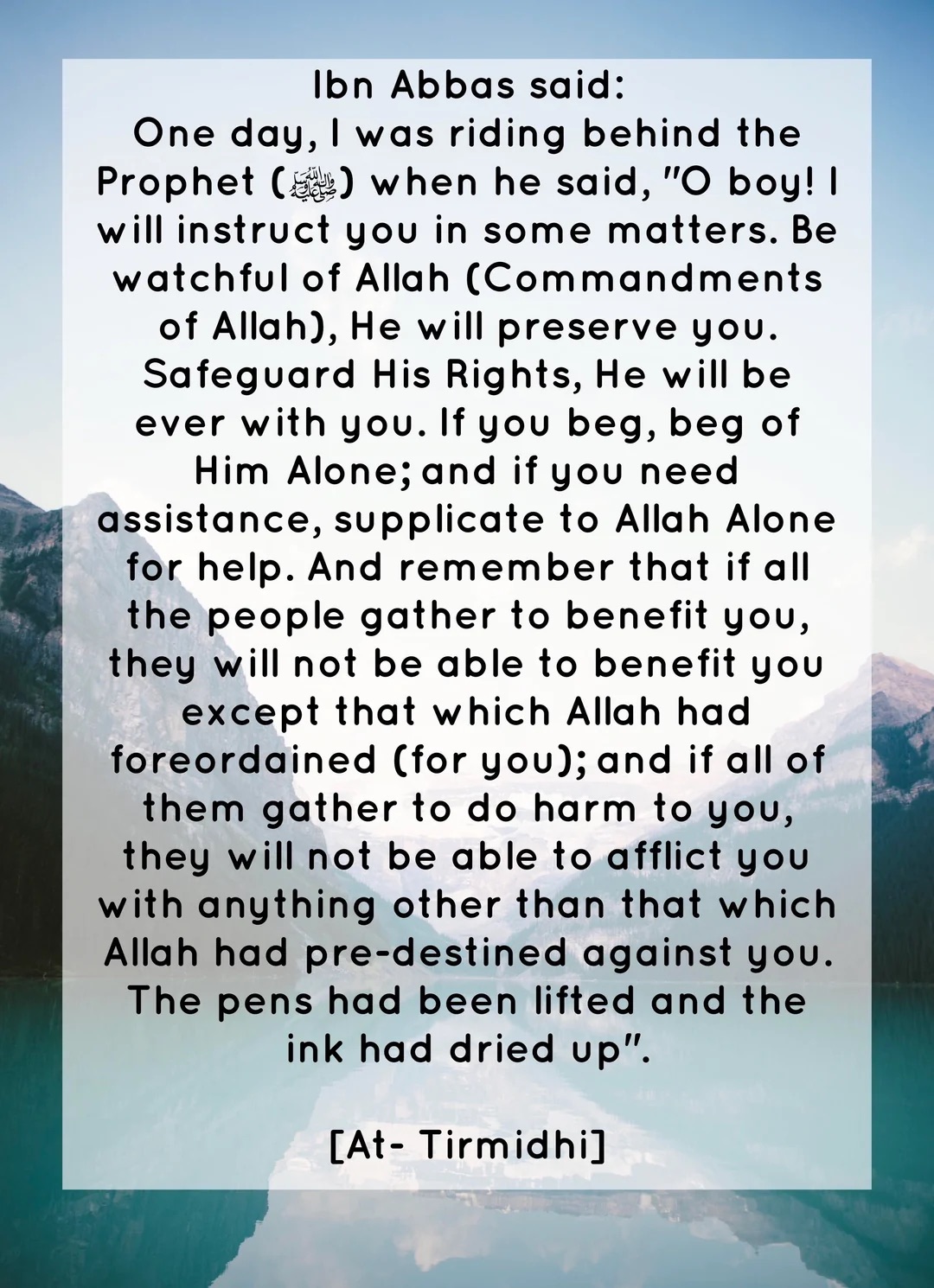
“It is incumbent upon every Muslim who singles out Allāh in worship, that he does not rely upon (anything) except Allāh, and does not seek help except with Allāh, and not believe acting in matters except for Allāh, and makes his actions a reflection of the ḥadīth of Ibn ʿAbbās -may Allāh be pleased with him-: One day I was (riding) behind the Prophet ﷺ (on the same mount) and he said,
❝O young man, Be mindful of Allāh and Allāh will protect you. Be mindful of Allāh and you will find Him in front of you. If you ask, then ask Allāh (alone); And if you seek help, then seek help from Allāh (alone). And know that if the nation were to gather together to benefit you with anything, they would not benefit you except with what Allāh had already prescribed for you. And if they were to gather together to harm you with anything, they would not harm you except with what Allāh had already prescribed against you. The pens have been lifted and the pages have dried.1❞2
Shaykh Muḥammad ʿAbd ar-Raḥmān ibn ʿAbd ar-Raḥīm Al-Mubārakfūrī -may Allāh have mercy on him- said:
❝The pens have been lifted and the pages have dried❞
Means: “What has been decreed has been written in al-Lawḥ al-Maḥfūdh (the Book of Decrees), and nothing else will be written after its completion.”3
Footnotes:
- Sunan at-Tirmidhī 2516. Graded Saḥīḥ (authentic) according to At-Tirmidhī ↩︎
- Maḥmūd Shukrī al-Alūsī, Ġāyah al-Amānī fī ʾl-Radd ʿAlá ʾl-Nabahānī 2/376 ↩︎
- Muḥammad al-Mubārakfūrī, Tuḥfah al-Aḥwadī bi Sharḥ Jāmiʿ al-Tirmithī, 7/186 ↩︎
وقال رضي الله عنه في كتابه “فتوح الغيب والغنية”: “ينبغي لكل مسلم موحد أن لا يتكل إلا على الله، ولا يستغيث إلا بالله، ولا يعتقد التصرف إلا لله، وأن يجعل مرآة عمله حديث ابن عباس، قال: كنت راكباً خلف رسول الله صلى الله عليه وسلم فقال: “يا غلام احفظ الله يحفظك، احفظ الله تجده تجاهك، إذا سألت فاسأل الله، وإذا استعنت فاستعن بالله، واعلم أن الأمة لو اجتمعت على أن ينفعوك بشيء لم ينفعوك إلا بشيء قد كتبه الله لك، ولو اجتمعت على أن يضروك بشيء لم يضروك إلا بشيء قد كتبه الله عليك، رفعت الأقلام وجفت الصحف”.
محمود شكري الألوسي، غاية الأماني في الرد على النبهاني ٢/٣٧٦
قوله :
( رفعت الأقلام وجفت الصحف )
أي كتب في اللوح المحفوظ ما كتب من التقديرات ولا يكتب بعد الفراغ منه شيء آخر ، فعبر عن سبق القضاء والقدر برفع القلم وجفاف الصحيفة تشبيها بفراغ الكاتب في الشاهد من كتابته .

