﷽
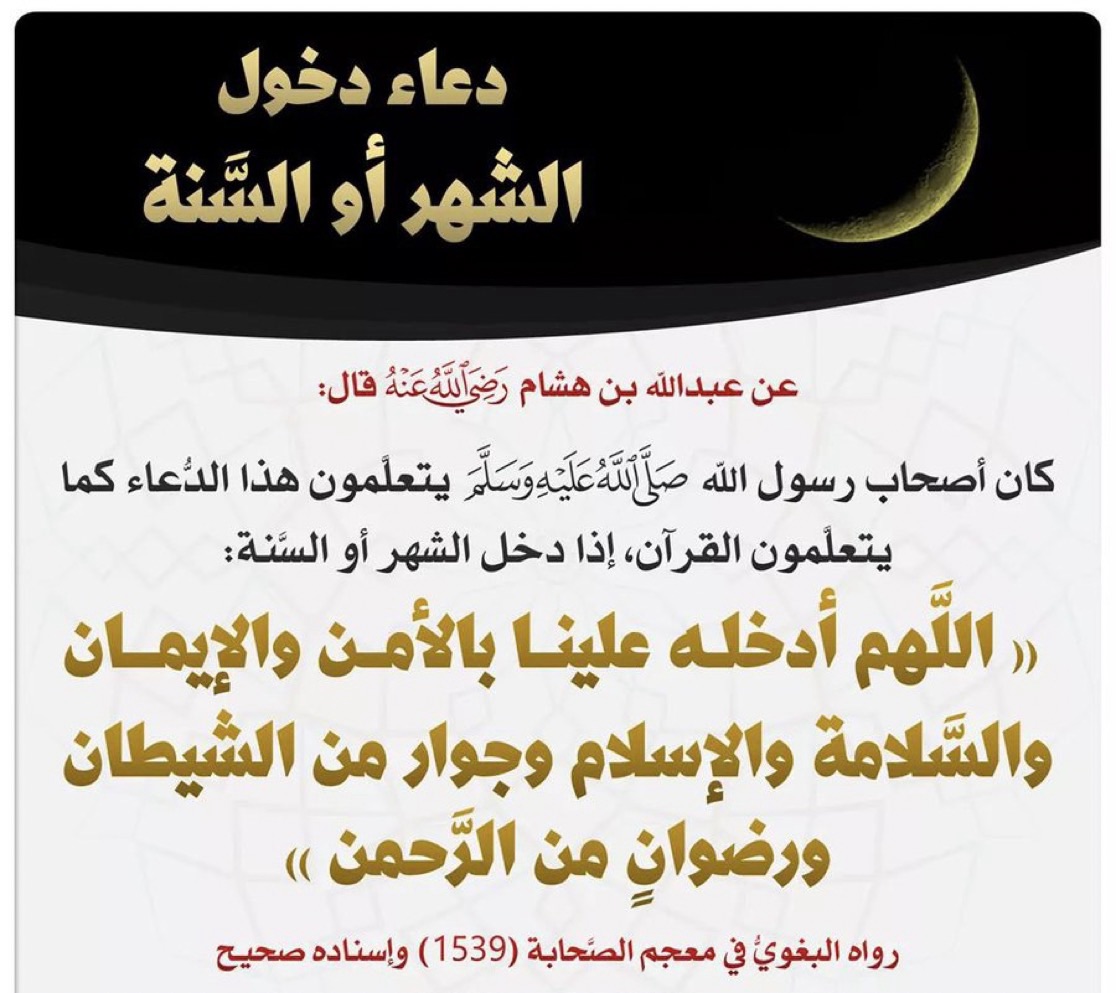
On the authority of ʿAbdullāh bin Hishām -may Allāh be pleased with him-: The companions of the Prophet ﷺ used to learn this Duʿāʾ (just as they would learn the Qurʾān) when a (new) year or month entered upon them:
اللَّهُمَّ أَدْخِلْهُ عَلَيْنَا بِالْأَمْنِ، وَالْإِيمَانِ، وَالسَّلَامَةِ، وَالْإِسْلَامِ، وَجِوَارٍ مِنَ الشَّيْطَانِ، وَرِضْوَانٍ مِنَ الرَّحْمَنِ
(Allāhumma adkhilhu ʿalaynā bil-Amni wal-Īmān was-Salāmati wal-Islām wa jiwārim-minash-Shayṭān wa riḍwānim-minar-Raḥmān)
Ḥadīth Ṣaḥīḥ; Narrated by al-Baghawī in Muʿjam aṣ-Ṣaḥābah (3/543)
“O Allāh, enter this upon us with security, faith, safety and Islam, and with protection from the Shayṭān, and with attaining the good pleasure of ar-Raḥmān.”
He said: Ibrāhīm bin Hāniʾ told me, from Asbagh who told us: Ibn Wahb told me, from Ḥaywah bin Shurayḥ, from Abū ʿAqīl -Zuhrah bin Maʿbad-, on the authority of his grandfather, ʿAbdullāh bin Hishām (may Allāh be pleased with him) with it (i.e. the Ḥadīth)
[Narrators in the Chain]
Al-Ḥāfidh (ibn Ḥajr) in the biography of ʿAbdullāh bin Hishām bin Zuhrah in ‘Al-Iṣābah’ said: “He and his father are companions; his grandson, Abū ʿAqīl Zuhrah bin Maʿbad, narrated from him, and he mentioned this Ḥadīth of his, and said: This is Mawqūf upon the conditions of aṣ-Ṣaḥīḥ (of Imām Al-Bukhārī).”-end of quote-
I said (Shaykh Yaḥyā al-Ḥajūrī): The men of this chain of narration are trustworthy.
Ibrāhīm bin Hāniʾ:
- Trustworthy, his biography is listed in ‘Al-Jarḥ wa at-Taʿdīl’ (2/144),
- Ibn Abī Ḥātim said: Thiqqah (Trustworthy) Ṣadūq (Honest)
- Al-Ḥākim said: Thiqqah Maʾmūn (Reliable)
- Adh-Dhahabī said in ‘As-Sayr’ no.10: Al-Ḥāfidh Al-Imām al-Qudwah al-ʿĀbid (The Preserver, the Leader, the Example, the Worshipper)
- Ad-Dāraquṭnī said: Thiqqah Fāḍil (Virtuous)
Asbagh: He is Ibn al-Farj, trustworthy, Al-Bukhārī and others have reported from him
Abū ʿAqīl: Zuhrah bin Maʿbad bin ʿAbdullāh bin Hishām is trustworthy. Narration of Ḥaywah through him and his grandfather’s narration through him is in Al-Bukhārī, as attributed in his biography from ‘Tahdhīb al-Kamāl’
[Other Paths & Narrations]
- It has another path (of narration) in al-Muʿjam (al-Awsaṭ) by Aṭ-Ṭabarānī (1241), it has Rishdīn bin Saʿad, (who is) weak but is suitable for corroborating narrations
- And another with Al-Aṣbahānī in ‘At-Targhīb wat-Tarhīb’ (1290), it has Ibn Lahīʿah
- And in this chapter is a weak Ḥadīth of Ṭalḥah bin ʿUbaidullāh -May Allāh be pleased with him- reported:
أَنَّ النَّبِيَّ صَلَّى اللَّهُ عَلَيْهِ وَسَلَّمَ كَانَ إِذَا رَأَى الْهِلَالَ قَالَ اللّهُمَّ أَهِلَّـهُ عَلَيْـنا بِالأمْـنِ وَالإيمـان، والسَّلامَـةِ والإسْلام، رَبُّنـا وَرَبُّكَ اللَّهُ.
At the sight of the new moon (of the lunar month), the Prophet (ﷺ) used to say,
❝Allāhumma ahillahu ʿalaynā bil-amni wal-īmān, was-salāmati wal-Islām, Rabbī wa RabbukAllāh (O Allāh, let this moon appear on us with security and Īmān; with safety and Islām. (O moon!) Our Rabb and your Rabb is Allāh).❞
Reported by At-Tirmidhī (3451), Ahmad (1397), Ibn as-Sunni (641), and Aṭ-Ṭabarānī in ‘ad-Dua” 904
- And another weak (narration) transmitted via Ibn ʿUmar -may Allah be pleased with them both- similar to it reported by Ad-Dārimī (1687), and Ibn Ḥibbān (888) and other than them.
Source: Pg. 311, Selection of The Most Important Remembrances, Second Edition (الإختيار لأهم صحاح الأذكار)
Authored by: Ash-Shaykh Al-ʿAllāmah Muḥaddith: Abu ʿAbdir-Rahman Yaḥyā bin ʿAlī al-Ḥajūrī al-Yamānī -may Allāh preserve him-
Translated by: Abū Āsiyah Muzaffar -may Allāh forgive him, his parents, his mashayikh, his family and all the Muslims-
١٥٣٩ – حدثني إبراهيم بن هانىء بن أصبغ قال: أخبرني ابن وهب عن حيوة عن أبي عقيل عن جده عبد الله بن هشام قال: كان أصحاب رسول الله ﷺ يتعلمون هذا الدعاء كما يتعلمون القرآن إذا دخل الشهر أو السنة:»اللهم أدخله علينا بالأمن والإيمان والسلامة والإسلام وجوار من الشيطان ورضوان من الرحمن.
ولا أعلم لعبد الله بن هشام غير هذا.
معجم الصحابة للبغوي – ٣ / ٥٤٣
(جِوار) براء مُهملة، كما في النُّسخة الخطِّيَّة المحفوظة بمكتبة الجامع الكبير بصنعاء اليمن [229/ب]، والنُّسخة الخطِّيَّة الكتَّانيَّة المحفوظة بالخرانة العامة بالرِّباط (ك 341) [352] لكتاب «معجم الصَّحابة» للبغوي، وكذلك في نسخة دار الكتب المصريَّة برقم (229) الجزء الثاني (6120) [146/أ] لكتاب «الإصابة» لابن حجر العسقلاني التي هي أفضل النُّسخ وأقدمها وأقربها لعصر المصنِّف، واعتمدها أصلًا المحقِّق الدكتور عبد الله بن عبد المحسن التركي، ووقع في بعض نسخه الخطِّيَّة المتأخِّرة (جَواز) بزاي مُعجمة، بمعنى: المجاوزة والتَّخطِّي.

