﷽
Abū ʿAbd al-ʿAzīz Quṭbud-Dīn Aḥmad Walīullāh bin ʿAbdur-Raḥīm bin Wajīhud-Dīn bin Muʿaẓẓam bin Manṣūr Al-ʿUmarī Ad-Dehlawī, commonly known as Shāh Waliyyullāh Dehlawī, was born in the year 1114H during the last years of the Mughal ruler, Aurangzeb. He was a Muḥaddith and a Mujaddid (reviver) of Ahlussunnah in the Indian subcontinent.
He was born in a village called Phulat, Muzaffarnagar in the state of UP, India. He memorized the Qurʾān at a young age, learnt the Arabic and Persian languages and acquired knowledge of Tawḥīd and Usūl Al-Fiqh of the four madhāhib and other than it. He travelled to the Ḥijāz in 1143 and benefited from the scholars at Makkah and Madina. He performed Ḥajj twice and returned to India in 1145.
He authored many literary works in Arabic and Persian including a translation of the Qurʾān in Persian and other famous books like Ḥujjatullah al-Bālighah, Al-Arbaʿīn, Tuḥfatul Muwaḥḥidīn and Izālatul-Khafāʾ ʿan Khilāfatil-Khulafāʾ. He passed away in 1176H at the age of 62 at Delhi and was buried there.
-Compiled from the introduction of the book ‘Izālatul-Khafāʾ ʿan Khilāfatil-Khulafāʾ’
The Muḥaddith, Shaykh Shāh Waliyyullāh ad-Dehlawī -may Allāh have mercy on him- said:
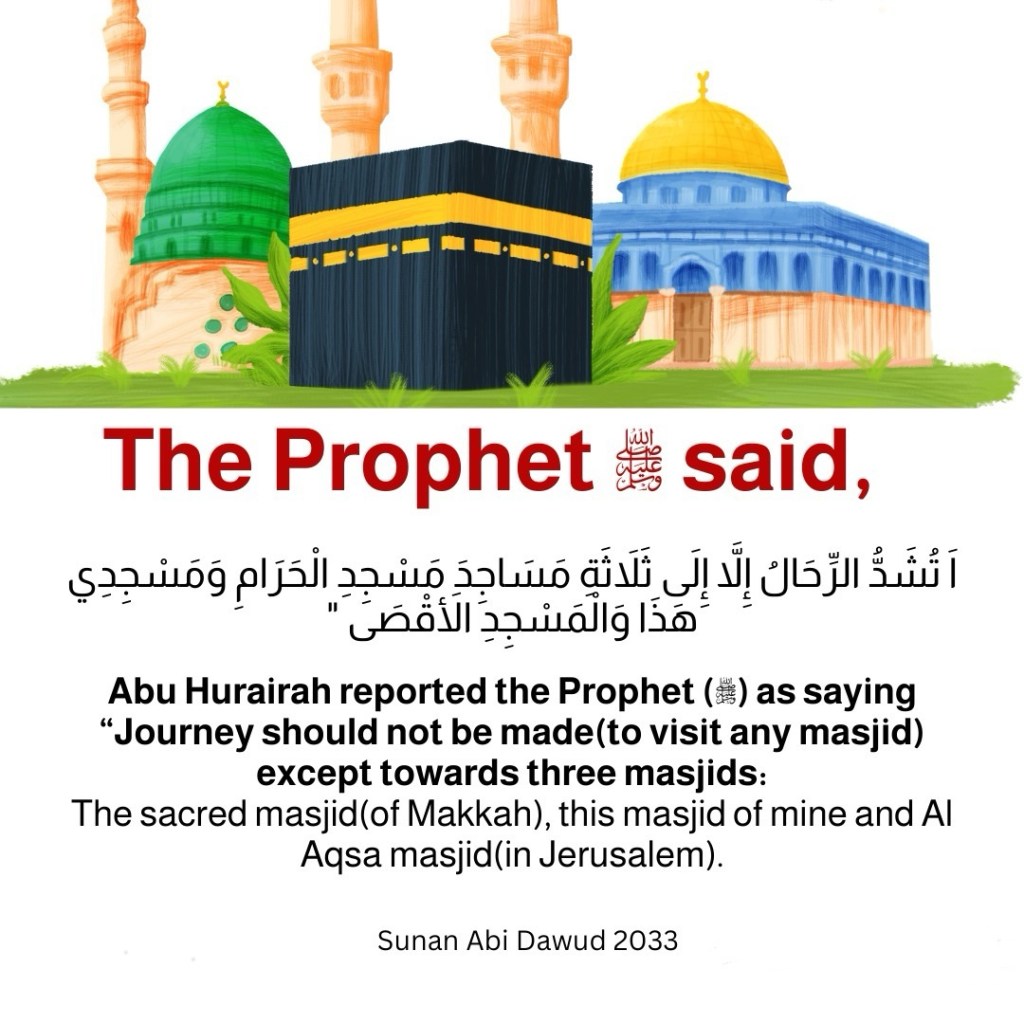
The Prophet (ﷺ) said,
“Do not set out on a journey except for three Masjids i.e. the Masjid AI-Ḥarām and the Masjid Al-Aqṣā, and this Masjid of mine (Masjid an-Nabawī ﷺ).”
Ṣaḥīḥ al-Bukhārī 1189
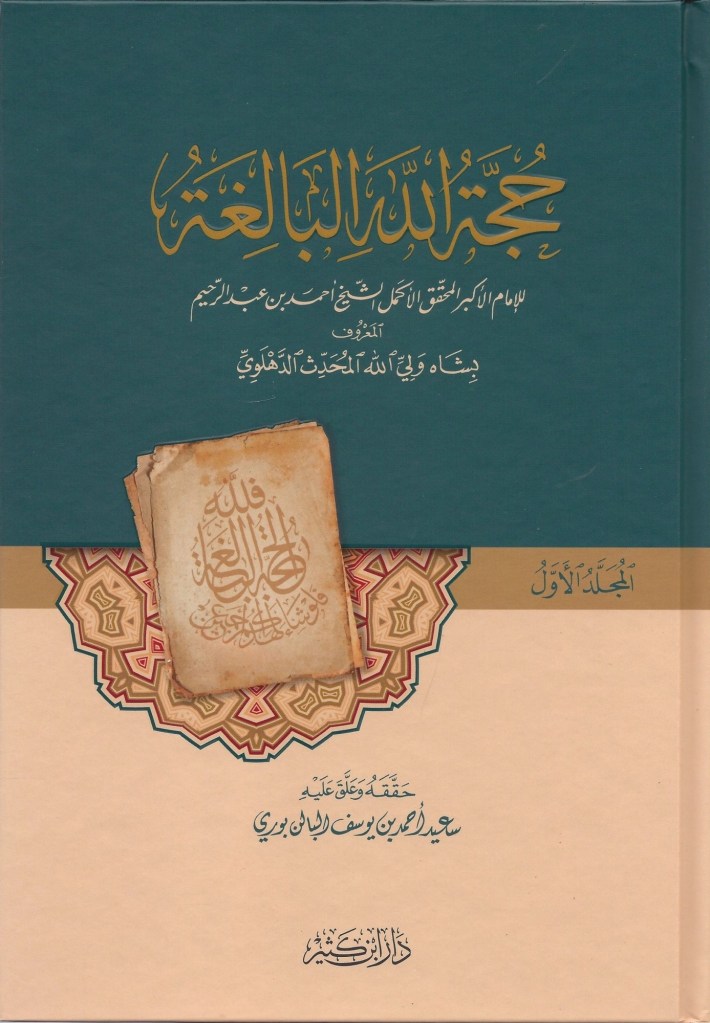
I (Shaykh Shāh Waliyyullāh ad-Dehlawī) say:
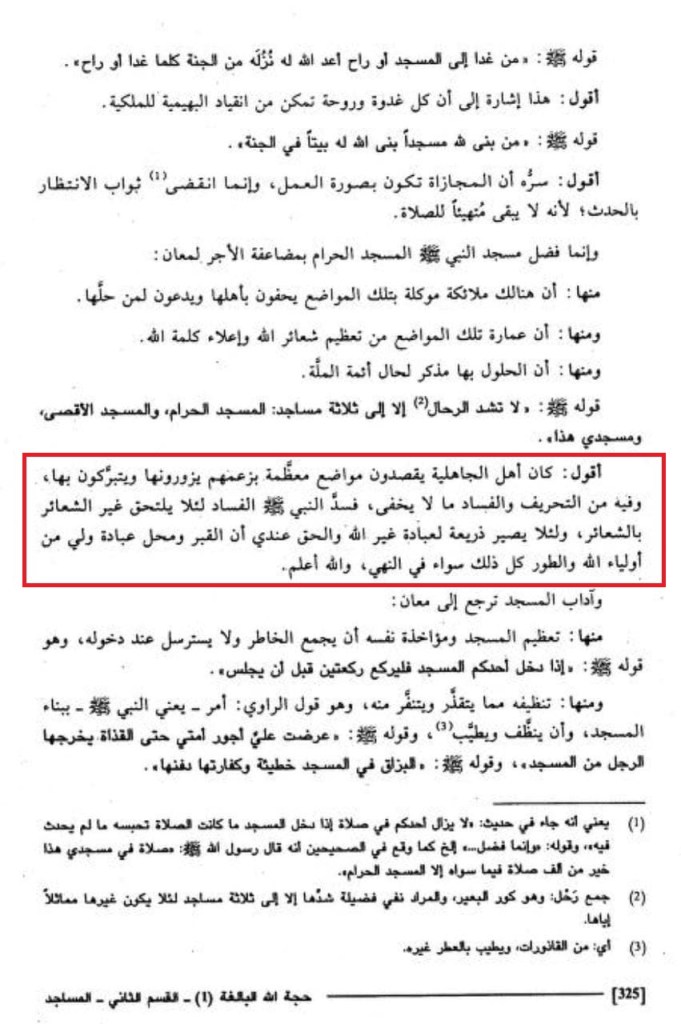
“The people during Jāhiliyyah (pre-Islamic days of ignorance) would undertake journeys to locations that are sacred as per their claims, to visit them, and they would seek blessings from them. And in it is distortion and corruption which is not hidden (to anyone). This is why the Prophet ﷺ blocked the means to corruption; lest places that are not from the revered symbols of Allāh become attached to the Shaʿāʾir (truly revered symbols), and thereby becomes a means to worship other than Allāh. The truth to me is that (undertaking a journey to) the grave, place of worship of a walī from the Awliyā (saints) of Allāh and Mount Tūr, all of them are at the same level of prohibition. And Allāh knows best”
Ḥujjatullah al-Bālighah 1/325
He also mentioned:
❝And from these (forms of shirk) is that they would seek help (istighāthah) from other than Allāh for their needs, like healing the sick, enriching the poor, they would make vows to them expecting the fulfillment of their objectives by those vows, and they would recite their names hoping for blessings through it. While Allah made it obligatory on them to say in their Ṣalāh:
﴿ إِیَّاكَ نَعۡبُدُ وَإِیَّاكَ نَسۡتَعِینُ ﴾
‘You alone we worship and You alone we ask for help.’
Al-Fātiḥah 1:5
And He -Exalted is He- said:
﴿ فَلَا تَدۡعُوا۟ مَعَ ٱللَّهِ أَحَدࣰا ﴾
‘So invoke not anyone along with Allah.’
Al-Jinn 72:18
The meaning of ‘ʿduāʾ’ (here) is not ‘worship’ as the scholars of tafsīr have said but it is ‘seeking help’ (istighāthah).❞
– Hujjatullāh al-Bālighah 1/120-121
– Translated by: Abū Āsiyah Muzaffar bin Ḥussain -may Allāh forgive him, his parents, his mashayikh, his family and all the Muslims-
وقال وليُّ الله الدهلوي: (قَولُه صلَّى اللهُ عليه وسلَّم: ((لا تُشَدُّ الرِّحالُ إلَّا إلى ثلاثةِ مَساجِدَ: المسجِدِ الحرامِ، والمسجِدِ الأقصى، ومَسْجدي هذا )) أقول: كان أهلُ الجاهليَّةِ يقصِدون مواضِعَ مُعَظَّمةً بزَعْمِهم يزورونَها، ويتبرَّكون بها، وفيه من التحريفِ والفَسادِ ما لا يخفى، فَسَدَّ النَّبيُّ صلَّى اللهُ عليه وسلَّم الفسادَ؛ لئلَّا يَلتَحِقَ غيرُ الشَّعائرِ بالشَّعائرِ، ولئلَّا يصيَر ذريعةً لعبادةِ غيرِ اللهِ، والحَقُّ عندي أنَّ القبرَ ومحَلَّ عبادةِ وليٍّ من أولياءِ اللهِ، والطُّورَ؛ كُلُّ ذلك سواءٌ في النَّهيِ. واللهُ أعلَمُ)
ومنها أنهم كانوا يستغيثون بغير الله في حوائجهم من شفاء المريض وغناء الفقير وينذرون لهم يتوقعون إنجاح مقاصدهم بتلك النذور ويتلون أسماءهم رجاء بركتها فأوجب الله تعالى عليهم أن يقولوا في صلاتهم: “إياك نعبد وإياك نستعين” وقال تعالى “فلا تدعوا مع الله أحدا” وليس المراد من الدعاء العبادة كما قال المفسرون بل هو الاستغاثة

