﷽
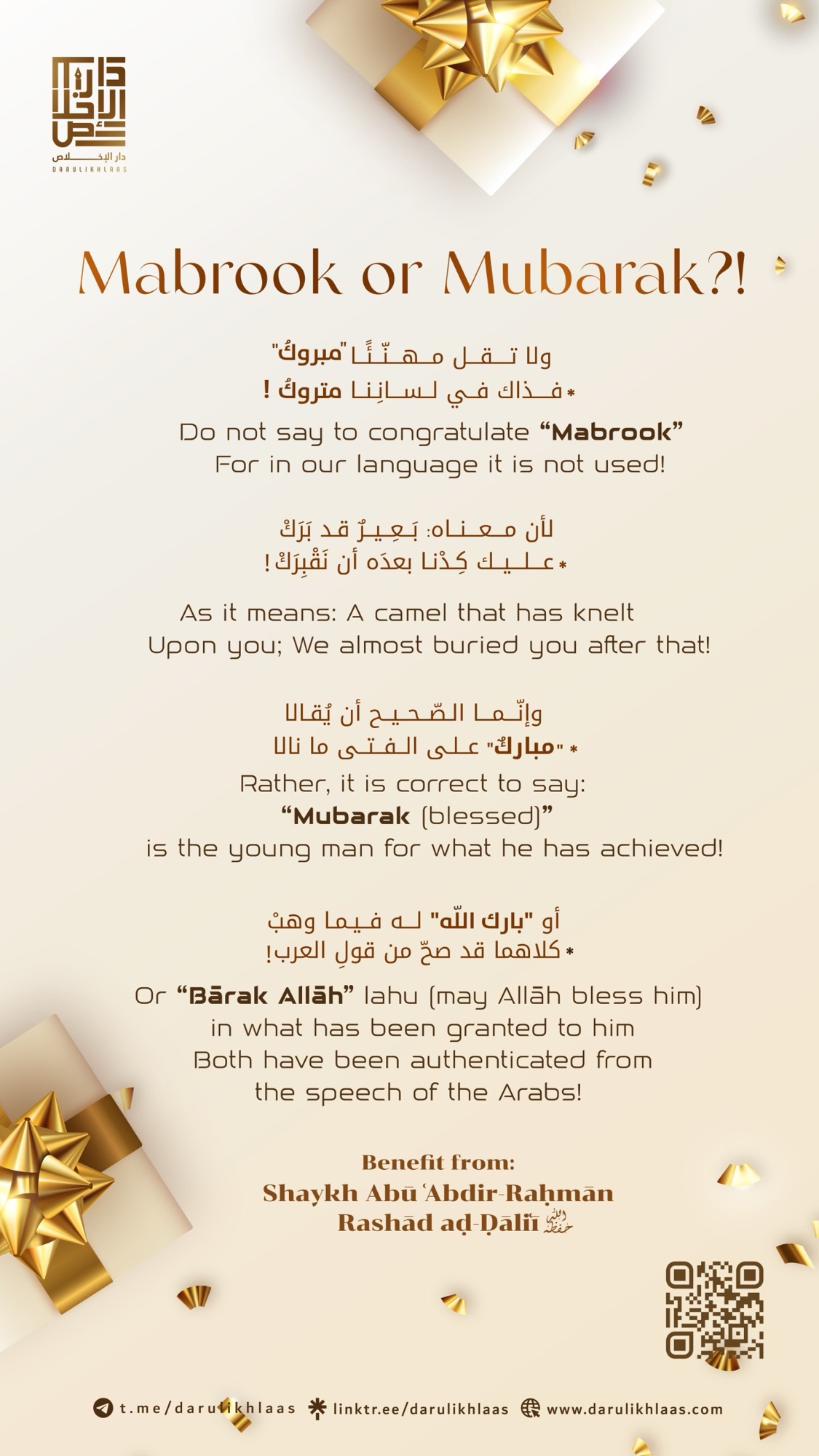
ولا تــــقـــل مـــهـــنّــئًــا “مبروكُ” *** فــــذاك فــي لــســـانِـنــا متروكُ!لأن مـــعـــنــاه: بَــعِــيــرٌ قـد بَرَكْ *** عـــلـــيــك كِـدْنـا بعدَه أن نَقْبِرَكْ!وإنّـــمـــا الـصّــحــيــح أن يُقـالا *** “مباركٌ” عــلـى الــفــتــى ما نالا!و “بارك الله” لـــه فــيـمـا وهبْ *** كلاهما قد صحّ من قولِ العرب!
Do not say to congratulate “Mabrook” *** For in our language it is not used!
As it means: A camel that has knelt *** Upon you; We almost buried you after that!
Rather, it is correct to say: ***  “Mubarak (blessed)” is the young man for what he has achieved!
Or “Bārak Allāh” lahu (may Allāh bless him) in what has been granted to him *** Both have been authenticated from the speech of the Arabs!
Shaykh Abū ʿAbdir-Raḥmān Rashād aḍ-Ḍāliʿī -may Allah preserve him- mentioned:
A brother says: Benefit related to the lesson at ʿAsr regarding the practice of some people congratulating saying Mabrook. He mentioned some lines of poetry without naming the poet. Some poets said:
ولا تــــقـــل مـــهـــنّــئًــا “مبروكُ”
Do not say to congratulate “Mabrook”
We had mentioned the correct way to congratulate, what do we say?
بَارَكَ اللَّهُ لَكَ (Bārak Allāhu laka)
“May Allāh bless you”
This is what has been conveyed in the Sunnah, its completion has come in the Sunan:
بَارَكَ الله لَكَ، وَبَارَكَ عَلَيْكَ، وَجَمَعَ بَيْنَكُمَا فِي خَيْرٍ. (Bārak Allāhu laka wa bāraka ʿalayk, wa jamaʿa baynakumā fī khayr)
“May Allah bless you and send blessings upon you, and bring goodness between you.”1
Abu Dawud 2130, At-Tirmidhi 1091, Ibn Majah 1905, Ahmad 8956, 8957, An-Nasa’i 259, Ibn As-Sunni 604, Ibn Hibban 4052. Graded Hasan and mentioned in As-Sahih Al-Musnad 1279 by Imam Al-Wadi’i as referred by Shaykh Yaḥyā bin ʿAlī al-Ḥajūrī in Selection of The Most Important Remembrances (الإختيار لأهم صحاح الأذكار)
Or in case of (greeting) women,
عَلَى الْخَيْرِ وَالْبَرَكَةِ، وَعَلَى خَيْرِ طَائِرٍ (ʿAlal-khayr wal-barakah, ʿalā khayr ṭāʾir)
“May you prosper and have blessings and have good fortune (from Allāh).”2
Sahih al-Bukhari, 5156
As for Mabrook, then we had mentioned that its meaning is wrong, it’s meaning in the language is incorrect, “Mabrook”. He mentioned it in lines of poetry. He says:
ولا تــــقـــل مـــهـــنّــئًــا “مبروكُ” *** فــــذاك فــي لــســـانِـنــا متروكُ!
Do not say to congratulate “Mabrook” *** For in our language it is not used!
i.e. The Arabic language.
لأن مـــعـــنــاه: بَــعِــيــرٌ قـد بَرَكْ *** عـــلـــيــك كِـدْنـا بعدَه أن نَقْبِرَكْ!
As it means: A camel that has knelt *** Upon you; We almost buried you after that!
Anything which is “Mabrook ʿalayk” means “it knelt upon you”. So it means that its an invocation against him and not for him!
لأن مـــعـــنــاه: بَــعِــيــرٌ قـد بَرَكْ *** عـــلـــيــك كِـدْنـا بعدَه أن نَقْبِرَكْ!
وإنّـــمـــا الـصّــحــيــح أن يُقـالا *** “مباركٌ” عــلـى الــفــتــى ما نالا!
و “بارك الله” لـــه فــيـمـا وهبْ *** كلاهما قد صحّ من قولِ العرب!
As it means: A camel that has knelt *** Upon you; We almost buried you after that!
Rather, it is correct to say: *** “Mubarak (blessed)” is the young man for what he has achieved!
Or “Bārak Allāh” lahu (may Allāh bless him) in what has been granted to him *** Both have been authenticated from the speech of the Arabs!
The second saying, as authenticated by the saying of Arabs, “May Allah bless him”, is also authenticated in the Sunnah of the Messenger ﷺ. This is a good reminder.
Source: https://t.me/rshad11/11098 Transcribed and Translated by: Abū Āsiyah Muzaffar -may Allāh forgive him, his parents, his mashayikh, his family and all the Muslims-Translator’s Footnotes:
- Abu Hurairah narrated that: When supplicating for the newlywed, the Prophet (ﷺ) would say: “May Allah bless you and send blessings upon you, and bring goodness between you.” Jami’ At-Tirmidhi 1091 ↩︎
- Narrated `Aisha: When the Prophet (ﷺ) married me, my mother came to me and made me enter the house where I saw some women from the Ansar who said, “May you prosper and have blessings and have good fortune.” Sahih al-Bukhari, 5156 ↩︎
أخ يقول فائدة تتعلق بدرس العصر في تهنئة بعض الناس بقولهم مبروك. ذكر أبياتا ولم يُسمي الشاعر الذي قال، قال بعض الشعراء
ولا تقل -مهنّئًا- مبروكُ **
قلنا ما هو الصحيح التهنئة ماذا يقول؟
بَارَكَ الله لَكَ. هذا الذي يراد به السنة. تتمة أيضا في السنن
بَارَكَ الله لَكَ، وَبَارَكَ عَلَيْكَ، وَجَمَعَ بَيْنَكُمَا فِي خَيْرٍ.
أو في حق النساء
عَلَى الْخَيْرِ وَالْبَرَكَةِ، وَعَلَى خَيْرِ طَائِرٍ
وأما مبروك فقلنا معناه خطأ، معناه في اللغة خطأ. مبروك. ذكر هذا أبياتا
قال
ولا تقل -مهنّئًا- مبروكُ ** فذاك فـي لسانِنا متروكُ
لسان العرب
لأن معناه: بـعيرٌ قد بَرَكْ ** عليك كِدْنا بعدَه أنْ نَقْبِرَكْ
يعني مبروك عليك أي شيء بركَ عليك. فمعناه يعني دعاء عليها هذا ليس دعاء له
لأن معناه: بـعيرٌ قد بَرَكْ ** عليك كِدْنا بعدَه أنْ نَقْبِرَكْ
لكن ما الصّحيحُ أن يُقالا ** مباركٌ على الفتى ما نالا
أو بارك اللهُ له ما قد وهبْ ** كلاهُما قد صحّ من قولِ العربْ
وهذا الثاني كما صح من قول العرب بارك الله له صح ايضا في سنة الرسول ﷺ. هذا تنبيه طيب

