بِسْمِ اللَّهِ الرَّحْمَنِ الرَّحِيمِ
Q. What do the eminent scholars -may Allāh be pleased with them all- say about people who shave their heads at the command of their Shaykhs and at graves, which they venerate and consider it to be an act of devotion and worship? Is this a Sunnah or a Bidʿah (innovation)? Is shaving the head in general, a Sunnah or a Bidʿah? Please advise us, may you be rewarded.
Shaykhul-Islām Ibn Taymiyyah –raḥimahullāh– replied:
All praises are due to Allāh alone.
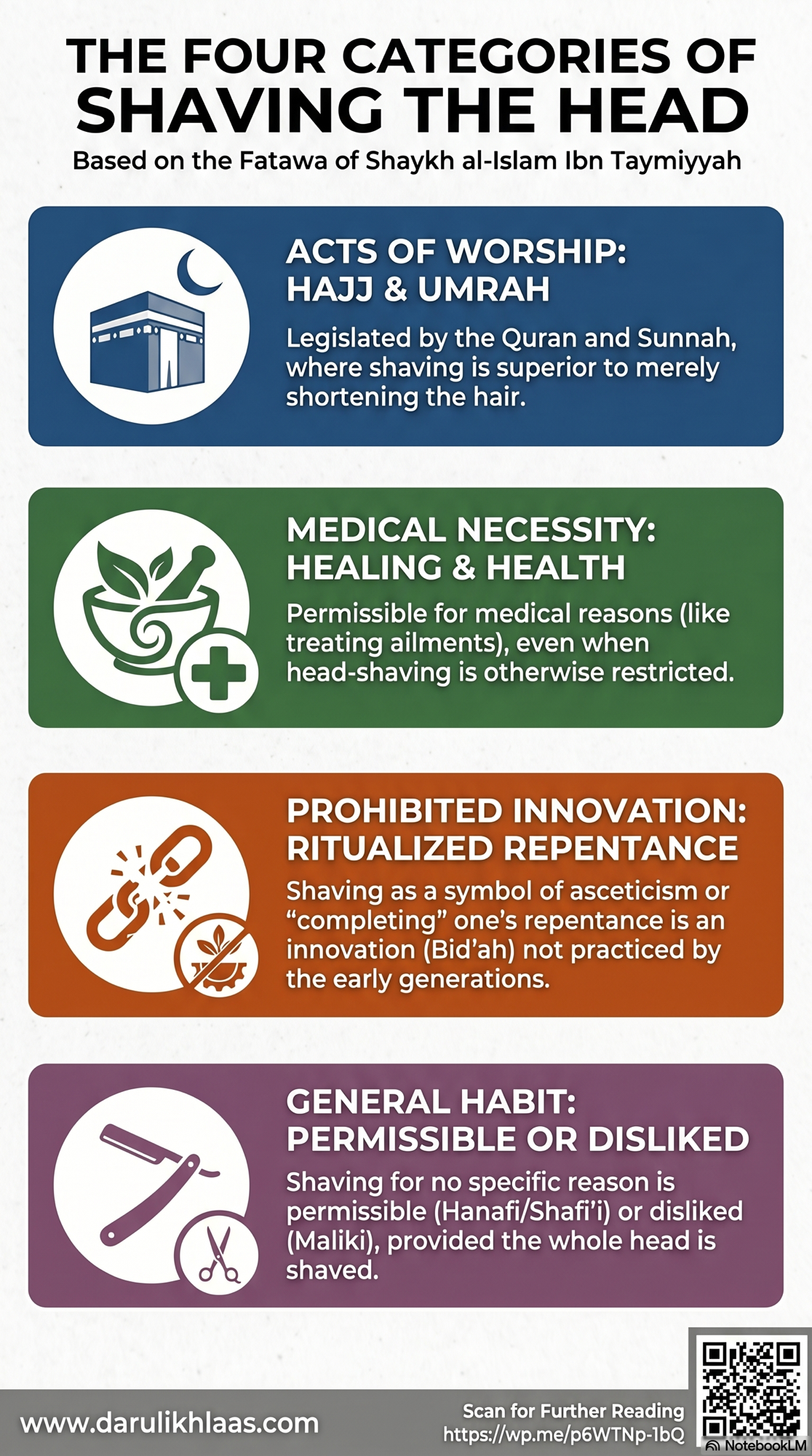
Shaving the head is of four types:
(1) One of them is shaving the head in Ḥajj and ʿUmrah and this is from what Allāh and His Messenger ﷺ have commanded, it is a prescribed practice and established by the Qurʾān, the Sunnah and the consensus of the Ummah.
He -the Most High- said:
﴿ لَتَدْخُلُنَّ الْمَسْجِدَ الْحَرَامَ إنْ شَاءَ اللَّهُ آمِنِينَ مُحَلِّقِينَ رُءُوسَكُمْ وَمُقَصِّرِينَ لَا تَخَافُونَ ﴾
❝Certainly, you shall enter Al-Masjid al-Ḥarām; if Allāh wills, secure, (some) having your heads shaved, and (some) having your head hair cut short, having no fear❞
Sūrah Al-Fatḥ 48:27
There are multiple narrations on the authority of the Prophet ﷺ that he shaved his head in his Ḥajj and ʿUmrah as did his Companions. From them were those who shaved their heads and some who shortened their hair. Shaving is better than shortening because the Prophet ﷺ said:
اللَّهُمَّ اغْفِرْ لِلْمُحَلِّقِينَ
‘O Allāh forgive those who shave their heads.’
The people said, ‘O Messenger of Allāh ﷺ and those who shorten their hair?’ He said
اللَّهُمَّ اغْفِرْ لِلْمُحَلِّقِينَ
‘O Allāh forgive those who shave their heads.’
The people said, ‘O Messenger of Allāh ﷺ and those who shorten their hair?’ He said
اللَّهُمَّ اغْفِرْ لِلْمُحَلِّقِينَ
‘O Allāh forgive those who shave their heads.’
The people said, ‘O Messenger of Allāh ﷺ and those who shorten their hair?’ He said:
وَالْمُقَصِّرِينَ
‘And those who shorten their hair.’1
In the farewell Ḥajj he ﷺ commanded the Companions who had brought a sacrificial animal with them to shorten their hair if they had performed Ṭawāf of the House and had walked between Ṣafā and Marwah for ʿUmrah and then to shave their heads once they had completed the Ḥajj. So (in this way) he combined for them, firstly, shortening their hair and, secondly, shaving their heads.
(2) The second type is shaving the head for a need, such as shaving the head for treatment. This is also permissible according to the Book, the Sunnah and the consensus of the scholars. Indeed Allāh has permitted the Muḥrim (pilgrim), for whom it is not usually allowed to have his head shaved until completion of the Ḥajj rites, to shave his head if he is suffering as He -the Most High- mentions:
﴿وَلَا تَحْلِقُوا رُءُوسَكُمْ حَتَّى يَبْلُغَ الْهَدْيُ مَحِلَّهُ فَمَنْ كَانَ مِنْكُمْ مَرِيضًا أَوْ بِهِ أَذًى مِنْ رَأْسِهِ فَفِدْيَةٌ مِنْ صِيَامٍ أَوْ صَدَقَةٍ أَوْ نُسُكٍ ﴾
❝And do not shave your heads until the Hadī (sacrificial animal) reaches the place of sacrifice. And whosoever of you is ill or has an ailment in his scalp (necessitating shaving), he must pay a Fidyah (ransom) of either observing Ṣawm (fasts) (three days) or giving Ṣadaqah (charity – feeding six poor persons) or offering sacrifice (one sheep)❞
Sūrah Al-Baqarah 2:196
What has been established by agreement of the Muslims is the ḥadīth of Kaʿab bin ʿUjrah that when the Prophet ﷺ passed by him in the ʿUmrah of Al-Ḥudaybiyah, lice were falling from his head, so the Prophet said to him:
أَيُؤْذِيك هَوَامُّك؟
‘Are your lice harming you?’
Kaʿab replied: ‘Yes.’
So the Prophet said:
احْلِقْ رَأْسَك وَانْسُكْ شَاةً؛ أَوْ صُمْ ثَلَاثَةَ أَيَّامٍ؛ أَوْ أَطْعِمْ فَرَقًا بَيْنَ سِتَّةِ مَسَاكِينَ
‘Shave your head and sacrifice a sheep, or fast three days or feed a group of six needy people.’2
The authenticity of this Ḥadīth is agreed upon and has been received with acceptance by all the Muslims.
(3) The third type is shaving the head for worship, religion and Zuhd (abstention from loving worldly things) in other than Ḥajj or ʿUmrah.
For example, some of the people command the one who repents, once he has repented to shave his head. Similar is the one who shaves the head as a sign of being from the people of rituals and religion or as a sign of the perfection of Zuhd and worship or as a sign that the one who shaves is better, more religious or has more Zuhd than the one who does not.
Then there are those who adhere to certain shaykhs such that if they repent, they shave their heads or they cut some of his hair. So the shaykh specifies who should have the scissors and prayer rug so he can pray on that rug (and not with the Muslims). His cutting hair from the heads of the people is from the complete authority befitting him and someone who is imitated in order to make the people repent.
So all of this is Bidaʿ which has neither been commanded by Allāh, nor by His Messenger ﷺ. It is not obligatory nor has it been recommended by any one scholar of the religion.
None of the Companions and their righteous followers did it, nor did any of the Muslim elders famous for their asceticism and worship, neither from among the Companions nor from among the followers nor their followers and those after them, such as Al-Fuḍayl bin ʿIyāḍ, Ibrāhīm bin Ad-ham, Abū Sulaymān ad-Dārānī, Maʿrūf al-Karkhī, Aḥmad bin Abil-Ḥiwārī, and as-Sarī as-Saqaṭī. Al-Junayd bin Muḥammad, Sahl bin ʿAbdullah at-Tustarī, and the likes of these did not cut anyone’s hair if he repented, nor did they order the repentant to shave his head.
There were those who accepted Islam at the time of the Prophet ﷺ but he never used to order them to shave their heads if they entered Islam nor did he cut anyone’s hair. He did not pray on a rug but, rather, he used to pray as an Imām with all the Muslims. He used to pray on what they used to pray, sit where they used to sit and he never used to make himself distinct from them by sitting on something special, whether a prayer rug or anything else.
However, he would sometimes prostrate on a small mat made of palm leaves, because the masjid did not have a special prayer rug. It was not spread out, but they used to pray on sand and pebbles, and most of the time he would prostrate on the ground until the mud was visible on his forehead -may Allāh bless him and his family and grant them peace-.
Whoever takes this Bidaʿ -which is not obligatory or even recommended- as a means of seeking closeness and obedience or as a path to Allāh making it a completion of the religion or orders the repentant to do it, both the Zāhid (the one who abstains from loving worldly things) and the worshipper, then he is a misguided person outside the path of Ar-Raḥmān (Allāh -the Most Merciful-), following the footsteps of the Shayāṭīn.
(4) The fourth type: that he shaves his head outside of the rituals of Ḥajj, without need and not as an act of devotion or piety. There are two opinions among the scholars regarding this, which are two narrations from Aḥmad. One of them is that it is Makrūh (disliked). This is the madh-hab (opinion) of Mālik and others. The second is that it is Mubāḥ (permissible). This is the well-known opinion among the followers of Abū Ḥanīfah and Ash-Shāfiʿī. Because the Prophet ﷺ saw a boy who had shaved part of his head and said:
احْلِقُوهُ كُلَّهُ أَوْ دَعُوهُ كُلَّهُ
“Shave it all or leave it all.”
And then young children were brought to him after three days and he shaved their heads.3 And because he forbade the practice of Qazaʿ (shaving only part of the head), and this indicates the permissibility of shaving the whole head. The first ones say: Shaving the head is a symbol of the people of innovation, for the Khawārij used to shave their heads, and some of the Khawārij considered shaving the head to be part of the completion of repentance and worship. It has been established in the two Ṣaḥīḥs that when the Prophet ﷺ was distributing, a man with a thick beard and a shaved head came to him in the year of the conquest.
– Majmūʿ Al-Fatāwā 22/115 – Translation: Abū Aasiya Muzaffar -may Allāh forgive him, his parents, his mashayikh, his family and all the Muslims-Source: https://ketabonline.com/ar/books/5564/read?part=21&page=10529&index=3265736/3265783/3265787
Footnotes
- Al-Bukhārī 1727, Muslim 1301 ↩︎
- Al-Bukhārī 1815, Muslim 1201 ↩︎
- ʿAbdullah bin Jaʿfar -may Allāh be pleased with them- said:
The Prophet (ﷺ) gave respite for three days to the family of Jaʿfar (after his martyrdom). Then he came and said, “Don’t weep for my brother after this day.” He said, “Bring all of my nephews to me.” We were accordingly brought as if we were chickens. Then he said, “Call for me a barber.” He directed him to shave our heads which he did. Abū Dāwūd 4192, Ṣaḥīḥ Al-Albānī ↩︎
مَا تَقُولُ السَّادَةُ الْعُلَمَاءُ – رَضِيَ اللَّهُ عَنْهُمْ أَجْمَعِينَ فِي أَقْوَامٍ يَحْلِقُونَ رُءُوسَهُمْ عَلَى أَيْدِي الْأَشْيَاخِ؛ وَعِنْدَ الْقُبُورِ الَّتِي يُعَظِّمُونَهَا وَيَعُدُّونَ ذَلِكَ قُرْبَةً وَعِبَادَةً: فَهَلْ هَذَا سُنَّةٌ أَوْ بِدْعَةٌ؟ وَهَلْ حَلْقُ الرَّأْسِ مُطْلَقًا سُنَّةٌ أَوْ بِدْعَةٌ؟ أَفْتُونَا مَأْجُورِينَ؟ .
الْحَمْدُ لِلَّهِ رَبِّ الْعَالَمِينَ، حَلْقُ الرَّأْسِ عَلَى أَرْبَعَةِ أَنْوَاعٍ: أَحَدُهُمَا: حَلْقُهُ فِي الْحَجِّ وَالْعُمْرَةِ فَهَذَا مِمَّا أَمَرَ اللَّهُ بِهِ وَرَسُولُهُ وَهُوَ مَشْرُوعٌ ثَابِتٌ بِالْكِتَابِ وَالسُّنَّةِ وَإِجْمَاعِ الْأُمَّةِ قَالَ تَعَالَى: {لَتَدْخُلُنَّ الْمَسْجِدَ الْحَرَامَ إنْ شَاءَ اللَّهُ آمِنِينَ مُحَلِّقِينَ رُءُوسَكُمْ وَمُقَصِّرِينَ لَا تَخَافُونَ} وَقَدْ تَوَاتَرَ عَنْ النَّبِيِّ صَلَّى اللَّهُ عَلَيْهِ وَسَلَّمَ أَنَّهُ حَلَقَ رَأْسَهُ فِي حَجِّهِ وَفِي عُمَرِهِ وَكَذَلِكَ أَصْحَابُهُ مِنْهُمْ مَنْ حَلَقَ وَمِنْهُمْ مَنْ قَصَّرَ. وَالْحَلْقُ أَفْضَلُ مِنْ التَّقْصِيرِ؛ وَلِهَذَا قَالَ صَلَّى اللَّهُ عَلَيْهِ وَسَلَّمَ {اللَّهُمَّ اغْفِرْ لِلْمُحَلِّقِينَ قَالُوا: يَا رَسُولَ اللَّهِ وَالْمُقَصِّرِينَ؟ قَالَ: اللَّهُمَّ اغْفِرْ لِلْمُحَلِّقِينَ قَالُوا: يَا رَسُولَ اللَّهِ وَالْمُقَصِّرِينَ؟ قَالَ: اللَّهُمَّ اغْفِرْ لِلْمُحَلِّقِينَ قَالُوا: يَا رَسُولَ اللَّهِ وَالْمُقَصِّرِينَ؟ قَالَ: وَالْمُقَصِّرِينَ} . وَقَدْ أَمَرَ الصَّحَابَةَ الَّذِينَ لَمْ يَسُوقُوا الْهَدْيَ فِي حَجَّةِ الْوَدَاعِ أَنْ يُقَصِّرُوا رُءُوسَهُمْ لِلْعُمْرَةِ إذَا طَافُوا بِالْبَيْتِ؛ وَبَيْنَ الصَّفَا وَالْمَرْوَةِ؛ ثُمَّ يَحْلِقُوا إذَا قَضَوْا الْحَجَّ. فَجَمَعَ لَهُمْ بَيْنَ التَّقْصِيرِ أَوَّلًا وَبَيْنَ الْحَلْقِ ثَانِيًا.
وَالنَّوْعُ الثَّانِي: حَلْقُ الرَّأْسِ لِلْحَاجَةِ مِثْلُ أَنْ يَحْلِقَهُ لِلتَّدَاوِي فَهَذَا أَيْضًا جَائِزٌ بِالْكِتَابِ وَالسُّنَّةِ وَالْإِجْمَاعِ؛ فَإِنَّ اللَّهَ رَخَّصَ لِلْمُحْرِمِ الَّذِي لَا يَجُوزُ لَهُ حَلْقُ رَأْسِهِ أَنْ يَحْلِقَهُ إذَا كَانَ بِهِ أَذًى كَمَا قَالَ تَعَالَى: {وَلَا تَحْلِقُوا رُءُوسَكُمْ حَتَّى يَبْلُغَ الْهَدْيُ مَحِلَّهُ فَمَنْ كَانَ مِنْكُمْ مَرِيضًا أَوْ بِهِ أَذًى مِنْ رَأْسِهِ فَفِدْيَةٌ مِنْ صِيَامٍ أَوْ صَدَقَةٍ أَوْ نُسُكٍ} وَقَدْ ثَبَتَ بِاتِّفَاقِ الْمُسْلِمِينَ حَدِيثُ {كَعْبِ بْنِ عُجْرَةَ لَمَّا مَرَّ بِهِ النَّبِيُّ صَلَّى اللَّهُ عَلَيْهِ وَسَلَّمَ فِي عُمْرَةِ الْحُدَيْبِيَةِ – وَالْقُمَّلُ يَنْهَالُ مِنْ رَأْسِهِ – فَقَالَ: أَيُؤْذِيك هَوَامُّك؟ قَالَ: نَعَمْ فَقَالَ: احْلِقْ رَأْسَك وَانْسُكْ شَاةً؛ أَوْ صُمْ ثَلَاثَةَ أَيَّامٍ؛ أَوْ أَطْعِمْ فَرَقًا بَيْنَ سِتَّةِ مَسَاكِينَ} وَهَذَا الْحَدِيثُ مُتَّفَقٌ عَلَى صِحَّتِهِ؛ مُتَلَقَّى بِالْقَبُولِ مِنْ جَمِيعِ الْمُسْلِمِينَ.
النَّوْعُ الثَّالِثُ: حَلْقُهُ عَلَى وَجْهِ التَّعَبُّدِ وَالتَّدَيُّنِ وَالزُّهْدِ؛ مِنْ غَيْرِ حَجٍّ وَلَا عُمْرَةٍ مِثْلَ مَا يَأْمُرُ بَعْضُ النَّاسِ التَّائِبَ إذَا تَابَ بِحَلْقِ رَأْسِهِ وَمِثْلَ أَنْ يُجْعَلَ حَلْقُ الرَّأْسِ شِعَارَ أَهْلِ النُّسُكِ وَالدِّينِ؛ أَوْ مِنْ تَمَامِ الزُّهْدِ وَالْعِبَادَةِ أَوْ يُجْعَلَ مَنْ يَحْلِقُ رَأْسَهُ أَفْضَلَ مِمَّنْ لَمْ يَحْلِقْهُ أَوْ أدين أَوْ أَزْهَدَ أَوْ أَنْ يُقَصَّرَ مِنْ شِعْرِ التَّائِبِ كَمَا يَفْعَلُ بَعْضُ الْمُنْتَسِبِينَ إلَى الْمَشْيَخَةِ إذَا توب أَحَدًا: أَنْ يَقُصَّ بَعْضَ شَعْرِهِ وَيُعَيِّنُ الشَّيْخُ صَاحِبَ مِقَصٍّ وَسَجَّادَةٍ؛ فَيَجْعَلُ صَلَاتَهُ عَلَى السَّجَّادَةِ وَقَصَّهُ رُءُوسَ النَّاسِ مِنْ تَمَامِ الْمَشْيَخَةِ الَّتِي يَصْلُحُ بِهَا أَنْ يَكُونَ قُدْوَةً يتوب التَّائِبِينَ: فَهَذَا بِدْعَةٌ لَمْ يَأْمُرْ اللَّهُ بِهَا وَلَا رَسُولُهُ؛ وَلَيْسَتْ وَاجِبَةً وَلَا مُسْتَحَبَّةً عِنْدَ أَحَدٍ مِنْ أَئِمَّةِ الدِّينِ؛ وَلَا فَعَلَهَا أَحَدٌ مِنْ الصَّحَابَةِ وَالتَّابِعِينَ لَهُمْ بِإِحْسَانِ وَلَا شُيُوخِ الْمُسْلِمِينَ الْمَشْهُورِينَ بِالزُّهْدِ وَالْعِبَادَةِ لَا مِنْ الصَّحَابَةِ وَلَا مِنْ التَّابِعِينَ وَلَا تَابِعِيهِمْ وَمَنْ بَعْدَهُمْ مِثْلُ الْفُضَيْل بْنِ عِيَاضٍ؛ وَإِبْرَاهِيمَ بْنِ أَدْهَمَ؛ وَأَبِي سُلَيْمَانَ الداراني وَمَعْرُوفٍ الْكَرْخِي وَأَحْمَد بْنِ أَبِي الْحِوَارِيِّ؛ وَالسَّرِيِّ السقطي؛ والْجُنَيْد بْنِ مُحَمَّدٍ وَسَهْلِ بْنِ عَبْدِ اللَّهِ التستري وَأَمْثَالِ هَؤُلَاءِ لَمْ يَكُنْ هَؤُلَاءِ يَقُصُّونَ شَعْرَ أَحَدٍ إذَا تَابَ وَلَا يَأْمُرُونَ التَّائِبَ أَنْ يَحْلِقَ رَأْسَهُ. وَقَدْ أَسْلَمَ عَلَى عَهْدِ النَّبِيِّ صَلَّى اللَّهُ عَلَيْهِ وَسَلَّمَ جَمِيعُ أَهْلِ الْأَرْضِ وَلَمْ يَكُنْ يَأْمُرُهُمْ بِحَلْقِ رُءُوسِهِمْ إذَا أَسْلَمُوا وَلَا قَصَّ النَّبِيُّ صَلَّى اللَّهُ عَلَيْهِ وَسَلَّمَ رَأْسَ أَحَدٍ. وَلَا كَانَ يُصَلِّي عَلَى سَجَّادَةٍ بَلْ كَانَ يُصَلِّي إمَامًا بِجَمِيعِ الْمُسْلِمِينَ يُصَلِّي عَلَى مَا يُصَلُّونَ عَلَيْهِ وَيَقْعُدُ عَلَى مَا يَقْعُدُونَ عَلَيْهِ لَمْ يَكُنْ مُتَمَيِّزًا عَنْهُمْ بِشَيْءِ يَقْعُدُ عَلَيْهِ لَا سَجَّادَةٍ وَلَا غَيْرِهِ وَلَكِنْ يَسْجُدُ أَحْيَانًا عَلَى الْخَمِيرَةِ – وَهِيَ شَيْءٌ يُصْنَعُ مِنْ الْخُوصِ صَغِيرٌ – يَسْجُدُ عَلَيْهَا أَحْيَانًا لِأَنَّ الْمَسْجِدَ لَمْ يَكُنْ مَفْرُوشًا بَلْ كَانُوا يُصَلُّونَ عَلَى الرَّمْلِ وَالْحَصَى وَكَانَ أَكْثَرَ الْأَوْقَاتِ يَسْجُدُ عَلَى الْأَرْضِ حَتَّى يَبِينَ الطِّينُ فِي جَبْهَتِهِ صَلَّى اللَّهُ عَلَيْهِ وَعَلَى آلِهِ وَسَلَّمَ تَسْلِيمًا. وَمَنْ اعْتَقَدَ الْبِدَعَ الَّتِي لَيْسَتْ وَاجِبَةً وَلَا مُسْتَحَبَّةً: قُرْبَةً وَطَاعَةً وَطَرِيقًا إلَى اللَّهِ وَجَعَلَهَا مِنْ تَمَامِ الدِّينِ وَمِمَّا يُؤْمَرُ بِهِ التَّائِبُ وَالزَّاهِدُ وَالْعَابِدُ فَهُوَ ضَالٌّ خَارِجٌ عَنْ سَبِيلِ الرَّحْمَنِ مُتَّبِعٌ لِخُطُوَاتِ الشَّيَاطِينِ .
وَالنَّوْعُ الرَّابِعُ : أَنْ يَحْلِقَ رَأْسَهُ فِي غَيْرِ النُّسُكِ لِغَيْرِ حَاجَةٍ وَلَا عَلَى وَجْهِ التَّقَرُّبِ وَالتَّدَيُّنِ : فَهَذَا فِيهِ قَوْلَانِ لِلْعُلَمَاءِ هُمَا رِوَايَتَانِ عَنْ أَحْمَد . أَحَدُهُمَا : أَنَّهُ مَكْرُوهٌ . وَهُوَ مَذْهَبُ مَالِكٍ وَغَيْرِهِ . وَالثَّانِي : أَنَّهُ مُبَاحٌ . وَهُوَ الْمَعْرُوفُ عِنْدَ أَصْحَابِ أَبِي حَنِيفَةَ وَالشَّافِعِيِّ ; لِأَنَّ { النَّبِيَّ صَلَّى اللَّهُ عَلَيْهِ وَسَلَّمَ رَأَى غُلَامًا قَدْ حَلَقَ بَعْضَ رَأْسِهِ فَقَالَ : احْلِقُوهُ كُلَّهُ أَوْ دَعُوهُ كُلَّهُ } { وَأُتِيَ بِأَوْلَادِ صِغَارٍ بَعْدَ ثَلَاثٍ فَحَلَقَ رُءُوسَهُمْ } . وَلِأَنَّهُ نَهَى عَنْ الْقَزَعِ وَالْقَزَعُ : حَلْقُ الْبَعْضِ : فَدَلَّ عَلَى جَوَازِ حَلْقِ الْجَمِيعِ . وَالْأَوَّلُونَ يَقُولُونَ : حَلْقُ الرَّأْسِ شِعَارُ أَهْلِ الْبِدَعِ فَإِنَّ الْخَوَارِجَ كَانُوا يَحْلِقُونَ رُءُوسَهُمْ وَبَعْضُ الْخَوَارِجِ يَعُدُّونَ حَلْقَ الرَّأْسِ مِنْ تَمَامِ التَّوْبَةِ وَالنُّسُكِ . وَقَدْ ثَبَتَ فِي الصَّحِيحَيْنِ { أَنَّ النَّبِيَّ صَلَّى اللَّهُ عَلَيْهِ وَسَلَّمَ لَمَّا كَانَ يَقْسِمُ جَاءَهُ رَجُلٌ عَامَ الْفَتْحِ كَثُّ اللِّحْيَةِ مَحْلُوقُ } .
——–
مجموع الفتاوى – المجلد 21 – الصفحة 115 – جامع الكتب الإسلامية

