﷽
[Ḥadīth ath-Thaqalayn]
It was reported in Ṣaḥīḥ Muslim that Zayd bin Arqam -may Allāh be pleased with him- narrated:
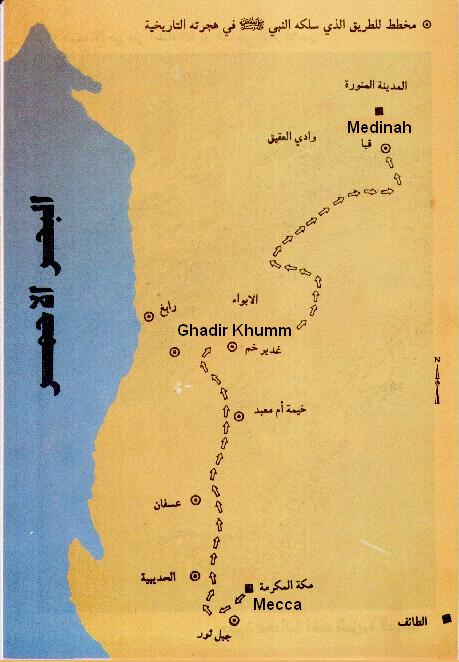
One day Allah’s Messenger ﷺ stood up to deliver a sermon at a watering place known as Khumm situated between Makkah and Madīnah. He praised Allāh, extolled Him and delivered the sermon and exhorted (us) and said:
❝Now to our purpose. O people, I am a human being. I am about to receive a messenger (the angel of death) from my Lord and I am about to respond to the call of my Lord, but I am leaving among you two weighty things: the one being the Book of Allāh in which there is right guidance and light, so hold fast to the Book of Allāh and adhere to it. He exhorted (us) (to hold fast) to the Book of Allāh.❞
Then he said:
❝The second are the members of my household, I remind you (of your duties) to the members of my family, I remind you (of your duties) to the members of my family. I remind you (of your duties) to the members of my family.❞
Ṣaḥīḥ Muslim, 2408
[Obligation to love ʿAlī and the Āl Bayt with the Ahlus-Sunnah]
In this hadith, is the evidence that it is obligatory to love ʿAlī -may Allah be pleased with him- and the Āl Bayt (family) of the Messenger of Allah ﷺ with a legitimate love without harshness or extremism, with reverence for them, and without slandering them.
❝I remind you (of your duties) to the members of my family.❞ i.e.: in recommending them and respecting them and repeated it thrice for emphasis
Al-Munāwi -may Allāh have mercy on him-, Fayḍ al-Qadīr 2/220
❝As for ʿAlī -may Allāh be pleased with him-, the Ahlus-Sunnah love him and take him as their Walī (ally) and testify that he is one of the rightly-guided Khalifahs and the guided imams❞
Shaykh al-Islām Ibn Taymiyyah -may Allāh have mercy on him-, Minhāj as-Sunnah an-Nabawiyyah (6/8)
[Illegitimate claims of the Rāfiḍah Shīʿah]
There is no evidence in the ḥadīth for what the Rāfiḍah claim that the Messenger ﷺ appointed ʿAlī -may Allah be pleased with him- on that day and in that place as Khalīfah (successor) for the Muslims after him!!
From what they invented about this is their celebration of ʿEīd of Ghadīr Khumm – attributed to Ghadīr Khumm, which is a place of water between Makkah and Madina – on the eighteenth of Dhul-Ḥijjah, claiming that the Prophet ﷺ, appointed ʿAlī -may Allāh be pleased with him- as the Khalifah (successor) on this day after the Farewell Hajj, and the ḥadīth does not contain in it evidence for the legitimacy of such a celebration, but rather they lyingly and falsely claimed it.
They celebrate on this day and count it as one of the best days of ʿEīd, and they prefer this feast over ʿEīd al-Fitr and ʿEīd al-Aḍhā, and they call it the Greater ʿEīd, and they claim that fasting on that day expiates the sins of sixty years, and is equivalent to fasting for the whole year, and is equal to one hundred pilgrimages, and that praying two rakʿahs on this day is equivalent to performing Ḥajj one hundred thousand times and equals a hundred thousand ʿUmrah with Allāh, and that Allāh fulfills in it the needs of this world and the Hereafter of ease and well-being, and they visit the shrine of ʿAlī-may Allāh be pleased with him- and seek blessings from it for those who are able to visit it, and read the supplication of mourning (Duʿāʾ an-Nudbah) falsely attributed to ʿAlī -may Allah be pleased with him- and other lies and sheer falsehoods invented by the Rāfiḍah, lyingly and falsely.
❝Those who have introduced into the religion of Allāh what is not from it and distorted the rulings of the Sharīʿah are not in a group more than those among the Rāfiḍah, for they have been introduced into the religion of Allāh by lying upon the Messenger of Allāh ﷺ, what none else lied upon him, and they rejected what no one else denied from the truth, and they distorted the Qurʾān in a way that no one else distorted.❞
Shaykh al-Islām Ibn Taymiyyah -may Allāh have mercy on him-, Minhāj as-Sunnah an-Nabawiyyah (3/129)
From the terrible things and the heinous evils in their celebration on this day; their insults and vilification against the companions of the Messenger of Allāh ﷺ and those who followed them in goodness among the people of Īmān, claiming that they had violated what the Prophet ﷺ stipulated.
❝They added reprehensible additions to it to fulfill their purpose, and put false words into it, and composed (words of) poetry on it, and they attacked the companions -may Allāh be pleased with them- by claiming that they violated the stipulation of the chosen Prophet ﷺ❞
Rūḥ al-Maʿānī 6/359, Al-Alūsī -may Allāh have mercy on him-
[Innovation of the Buyid Caliph in the 4th century AH]
The first to introduce this innovation was Muʿizz ad-Dawlah Aḥmad bin Buwayh (d. 356 AH), and he was one of the sultans of the Buyid dynasty, which was a Shīʿite state established in the western part of Iran and Iraq.
❝On the first ten days of Dhul-Ḥijjah, Muʿizz ad-Dawla bin Buwayh ordered that decorations be displayed in Baghdad, that markets open at night, as on festivals, and that the dabādab – a type of instrument used for amusement – and trumpets be blown, and that flames are lit at the gates of the princes, and at the police, for joy on ʿEīd al-Ghadīr, so it was a strange time that was witnessed, and a heinous, apparent and reprehensible innovation.❞
Al-Bidāyah wa’n-Nihāyah (11/243), Al-Ḥāfiẓ ibn Kathīr -may Allāh have mercy on him-
❝Know that ʿEīd al-Ghadīr was not a legislated festival, nor did any of the predecessors of the Ummah do it so that they may be followed. The first ones known in Islam was in Iraq during the days of Muʿizz ad-Dawla ʿAlī bin Buwayh, when he newly introduced this in the year 352 AH, so the Shīʿite took it from that time as an ʿEīd…❞
He went on to say:
❝And from their ways on this ʿEīd is to spend its night with prayer, and to pray two rak’ahs on its morning before noon, to wear new clothes during it, to free slaves, and to increase in righteous deeds and sacrifices.❞
Al-Khuṭaṭ al-Maqrīziyyah 2/116, Al-Maqrīzī -may Allāh have mercy on him-
[Celebration of the Fatimid Bāṭiniyyah]
It is also an important day for most of the Fatimid Bāṭiniyyah who ruled over Egypt, the Levant and some parts of Yemen. On this day, in honor of him, they pledged allegiance to the Fatimid Caliph, Al-Mustaʿlī, in the year 487 AH. Refer to Wafayāt al-Aʿyān 1/62 by Ibn Khalkān.
So it is known that celebrating this day is from the innovations of the Rāfiḍah and the Bāṭiniyyah, and that the occasion for which they celebrate is a lie and falsehood.
[Every Innovation in the Religion is Rejected]
It comes in the Ṣaḥīḥayn:
❝Whoever innovates something in this matter of ours that is not part of it, will have it rejected❞
and in a narration by Muslim:
❝Whoever does an act that is not in accordance with our matter will have it rejected.❞
i.e., it will be rejected from the one who did it.
May Allāh protect us from misleading whims and temptations, and grant us with following the guidance of the Messenger of Allāh ﷺ
– Umm Ḥafṣ Sayyidah bint ʿAbdullāh bin Aḥmad al-Ḥamzī -may Allāh preserve her-
– Translated and Headings added by Abū Āsiyah Muẓaffar -may Allah forgive him, his parents, his teachers, his family and all the Muslims
Source: https://t.me/omhafes/6310
▪️بدعة الاحتفال بعيد غدير خُمّ▪️
▪جاء في صحيح مسلم من حديث زيد بن أرقم رضي الله عنه قال : قَامَ رَسُولُ اللهِ صَلَّى الله عَلَيْهِ وَسَلَّمَ يَوْمًا فِينَا خَطِيبًا ، بِمَاءٍ يُدْعَى خُمًّا بَيْنَ مَكَّةَ وَالْمَدِينَةِ فَحَمِدَ الله وَأَثْنَى عَلَيْهِ ، وَوَعَظَ وَذَكَّرَ ، ثُمَّ قَالَ : “أَمَّا بَعْدُ ، أَلَا أَيُّهَا النَّاسُ فَإِنَّمَا أَنَا بَشَرٌ يُوشِكُ أَنْ يَأْتِيَ رَسُولُ رَبِّي فَأُجِيبَ ، وَأَنَا تَارِكٌ فِيكُمْ ثَقَلَيْنِ : أَوَّلُهُمَا كِتَابُ اللهِ فِيهِ الْهُدَى وَالنُّورُ فَخُذُوا بِكِتَابِ اللهِ ، وَاسْتَمْسِكُوا بِهِ” ، فَحَثَّ عَلَى كِتَابِ اللهِ وَرَغَّبَ فِيهِ.
ثُمَّ قَالَ : “وَأَهْلُ بَيْتِي أُذَكِّرُكُمُ اللهَ فِي أَهْلِ بَيْتِي ، أُذَكِّرُكُمُ اللهَ فِي أَهْلِ بَيْتِي ، أُذَكِّرُكُمُ اللهَ فِي أَهْلِ بَيْتِي..”.
– في هذا الحديث دليل على وجوب محبة علي رضي الله عنه وآل بيت رسول الله صلى الله عليه وسلم محبة شرعية بلاجفاء ولاغلو ، وتوقيرهم ، وعدم الطعن فيهم .
– قال المناوي رحمه الله في فيض القدير (٢٢٠/٢) : ( “أذكركم الله في أهل بيتي ” أي: في الوصية بهم واحترامهم وكرره ثلاثا للتأكيد )اهـ
– وقال شيخ الإسلام ابن تيمية رحمه الله في منهاج السنة النبوية(٨/٦) : (وأما علي رضي الله عنه فإن أهل السنة يحبونه ويتولونه ويشهدون بأنه من الخلفاء الراشدين والأئمة المهديين)اهـ
– وليس في الحديث دليل على مايزعمه الرافضة بأن الرسول صلى الله عليه وسلم نصّبَ عليا رضي الله عنه في ذلك اليوم وفي ذلك الموضع خليفة للمسلمين من بعده !!.
– ومما أحدثوه في هذا احتفالهم بعيد غدير خُمّ – نسبة لغدير خُمّ وهو موضع ماء بين مكة و المدينة – في الثامن عشر من ذي الحجة مدّعين أن النبي صلى الله عليه وسلم نصّب علياً رضي الله عنه للخلافة في هذا اليوم بعد حجة الوداع ، وليس في الحديث دليل على مشروعية مثل هذا الاحتفال وإنما زعموا ذلك زورا وكذبا .
فيحتفلون في هذا اليوم ويعدونه من أفضل الأعياد ويفضلون هذا العيد على عيدي الفطر والأضحى ، ويسمونه بالعيد الأكبر ، ويزعمون أن صيام يومه يكفر ذنوب ستين سنة ، ويعدل صيام الدهر كله ، ويعدل مائة حجة ، وأن صلاة ركعتين في هذا اليوم تعدل عند الله مائة ألف حجة ومائة ألف عمرة ، وأن الله يقضي فيه حوائج الدنيا والآخرة في يسر وعافية ، ويقومون بزيارة مقام علي رضي الله عنه والتبرك به لمن أمكنه زيارته ، وقراءة دعاء الندبة المنسوب كذباً لعلي رضي الله عنه ، وغير ذلك من الكذب والأباطيل المحضة التي اخترعتها الرافضة كذباً وزورا .
– قال شيخ الإسلام ابن تيمية رحمه الله في منهاج السنة(١٢٩/٣) :( الذين أدخلوا في دين الله ماليس منه وحرفوا أحكام الشريعة ليسوا في طائفة أكثر منهم في الرافضة ؛ فإنهم أدخلوا في دين الله من الكذب على رسول الله صلى الله عليه وسلم ما لم يكذبه غيرهم ، وردوا من الصدق ما لم يرده غيرهم ، وحرفوا القرآن تحريفا لم يحرفه غيرهم)اهـ
– ومن الأمور الفظيعة والمنكرات الشنيعة في احتفالهم في هذا اليوم ؛ سبهم وطعنهم في صحابة رسول الله صلى الله عليه وسلم ومن تبعهم بإحسان من أهل الإيمان بزعمهم أنهم خالفوا مانصّ عليه النبي صلى الله عليه وسلم .
– قال الألوسي رحمه الله في روح المعاني( ٣٥٩/٦) : (وقد زادوا فيه إتماما لغرضهم زيادات منكرة ، ووضعوا في خلاله كلمات مزورة ، ونظموا في ذلك الأشعار ، وطعنوا على الصحابة رضي الله تعالى عنهم ، بزعمهم أنهم خالفوا نص النبي المختار صلى الله عليه وسلم)اهـ
– وأول من أحدث هذه البدعة هو معز الدولة أحمد بن بويه(ت٣٥٦هـ) ، وهو أحد سلاطين الدولة البويهية ، وهي دولة شيعية قامت في الجزء الغربي من إيران و العراق.
قال الحافظ ابن كثير رحمه الله في البداية والنهاية (٢٤٣/١١) : ( وفي عشر ذي الحجة أمر معز الدولة بن بويه بإظهار الزينة في بغداد ، وأن تفتح الأسواق بالليل كما في الأعياد ، وأن تضرب الدَّبادب- من أنواع آلات اللهو- والبوقات ، وأن تشعل النيران في أبواب الأمراء ، وعند الشُّرَط ، فرحاً بعيد الغدير ؛ فكان وقتاً عجيباً مشهوداً ، وبدعة شنيعة ظاهرة منكرة)اهـ
وقال المقريزي رحمه الله في الخطط المقريزية (١١٦/٢) :( اعلم أن عيد الغدير لم يكن عيداً مشروعاً ، ولا عمله أحد من سالف الأمة المقتدى بهم ، وأول ما عُرف في الإسلام بالعراق أيام معز الدولة علي بن بويه ، فإنه أحدثه في سنة اثنتين وخمسين وثلاثمائة فاتخذه الشيعة من حينئذٍ عيداً ..)
ثم قال رحمه الله : (ومن سنتهم في هذا العيد أن يحيوا ليلته بالصلاة ، ويصلوا في صبيحته ركعتين قبل الزوال ، ويلبسوا فيه الجديد ، ويعتقوا الرقاب ، ويكثروا من عمل البر ومن الذبائح)اهـ
– وهو أيضاً يوم معظم عند الفاطميين الباطنيين الذين حكموا مصر وبلاد الشام وبعض أجزاء اليمن ، وفي يومه تعظيماً له تم مبايعة الخليفة الفاطمي المستعلي عام ٤٨٧هـ . وانظر وفيات الأعيان لابن خلكان(٦٢/١).
– فعُلِم أن الاحتفال بهذا اليوم من بدع الرافضة والباطنية ، وأن المناسبة التي يحتفلون فيه من أجلها كذب وبهتان .
وفي الصحيحين : ( من أحدث في أمرنا هذا ماليس منه فهو رد) ، وفي رواية لمسلم : ( من عمل عملا ليس عليه أمرنا فهو رد) ، أي مردود على صاحبه عافانا الله من مضلات الأهواء والفتن ، ورزقنا اتباع هدي رسول الله صلى الله عليه وآله وسلم .
أم حفص بنت الحمزي

