﷽
[INTRODUCTION]
Shaykh Al-Islām Ibn Taymiyyah said:
As for accepting gifts from them (i.e., the disbelievers) on the days of their festivals, then we have already quoted from ʿAlī -may Allah be pleased with him- that there came to him a gift on the celebration of Nayrūz and he accepted it.
And Ibn Abī Shaybah narrated in al-Muṣannaf: Jarīr narrated to us from Qābūs from his father: A woman asked ʿĀʾishah: “We have some wet nurses from al–Majūs (i.e. the Magians); and when it is their festival, they give us gifts.”
So she said: “As for what is slaughtered (of animals) on that day, then do not eat it. However, eat from their vegetation (i.e. vegetables and what grows on their trees).”
And he (i.e. Ibn Abī Shaybah) also narrated: Wakīʿ narrated to us from al-Ḥasan bin Ḥakīm from the female servant of Abū Barzah from Abū Barzah that he used to live in the locality of al-Majūs; And they would give him gifts on the celebrations of Nayrūz and Mahrajān, So he would say to his family: “Eat from the fruits they give you; and reject what is besides that.”
So all of this indicates that there is no effect of the festival in preventing one from accepting their gifts. Indeed the ruling of accepting gifts during the celebratory days is the same as any other days (i.e. whether it is their festival or not). Because it does not entail aiding them in making apparent the symbols of their kufr.
However, accepting the gifts of the disbelievers from Ahl al-Ḥarb and Ahl adh-Dhimmah (i.e. the people at war with Muslims and those disbelievers living in the Muslim lands) is a separate issue. There is in it differences of opinion and need of a detailed explanation. This is not the place for it.
And it is allowed to eat the food of Ahl al-Kitāb (the People of the Book) on their days of festivals, regardless of whether it is bought or received as a gift, or other than that as long as it was not slaughtered for the purpose of the day of celebration.
As for the slaughtered meat of al-Majūs, then its ruling is well known. It is ḥarām (i.e. prohibited) at all times.
As for that which is slaughtered by the people of the Book for their festivals and that which they slaughter as an act of worship to draw close to anything other than Allāh, as the Muslims offer sacrifices as an act of worship to draw closer to Allah, namely as that which they sacrifice to the Messiah, two views have been narrated from Aḥmad concerning that, the most well known of which in his texts is that it is not permissible to eat it even if the name of something other than Allāh has not been mentioned over it. The prohibition on that was narrated from ʿĀʾishah and ʿAbdullāh bin ʿUmar …”
–Ibn Taymiyyah, Iqtiḍāʾ al-Ṣirāṭ al-Mustaqīm 2/51[COMMENTARY]
Shaykh Muḥammad bin Ṣāliḥ al-ʿUthaymīn -may Allāh have mercy on him- mentioned in his commentary on the afore-mentioned speech:
This (statement) from the Shaykh is strange -may Allāh have mercy on him-; This is because accepting their gifts on their days of celebration is a sign that one is pleased with their festivals. However, there are narrations from the Companions -may Allāh be pleased with them- regarding this affair. Perhaps the Companions accepted these gifts because it was a time when al-Islām was strong and the people would not be deceived by such gifts. And also the disbelievers knew then that the Muslims were higher than them.
However, in our times today, if you were to accept gifts from them on their days of festivities they become joyous, and they say: “These Muslims agree with us that this day is a day of celebration.”
So, for this reason, it is necessary for us to explain this matter. It is to be said: If it is feared that it will elevate and raise the disbelievers such that they will think that (accepting of gifts) is our showing pleasure at their annual festivities then the gift is not to be accepted, whether it is something that requires slaughtering or not.
–Muḥammad bin Ṣāliḥ al-ʿUthaymīn, Sharḥ Iqtiḍāʾ al-Ṣirāṭ al-Mustaqīm 1/409[CRITICISM ON THE CHAINS OF NARRATION]
1. As for the narration from ʿAlī -may Allāh be pleased with him- that there came to him a gift on the celebration of Nayrūz and he accepted it, in it are the below defects:
Firstly, the chain is Mursal (disconnected) because Muḥammad bin Sīrīn -may Allāh have mercy on him- did not hear (narrations) from ʿAlī -may Allāh be pleased with him-. He was born when there were two years remaining of the Khilāfah of ʿUthmān -may Allāh be pleased with him-.
Secondly, if the athar (narration) from ʿAlī -may Allāh be pleased with him- which is alluded to by Shaykh al-Islām is authentic, then it does not indicate that he accepted their gifts – rather it indicates that he disliked that it be said, “it is their ʿEid”. And this is the actual wording from Ibn Taymiyyah in “Al-Iqtiḍāʾ” (1/515) where he stated: “And with the chain of transmission to Abū Usāmah, on the authority of Ḥammād bin Zaid, on the authority of Hisham, on the authority of Muḥammad bin Sīrīn who said: ‘There came to ʿAlī -may Allāh be pleased with him- the day of Nayrūz.’ So he said: ‘What is this?’ They replied: ‘O leader of the believers today is the day of Nayrūz.’ He said: ‘They make every day Fayrūz!’ Abū Usāmah said: ‘He disliked to say: An–Nayrūz.’”
Al-Bayhaqī said: ‘In this narration, it is as if it is disliked to designate a day in this manner which the Sharīʿah has not specified.’”
2. As for the narration of ʿĀʾishah -may Allāh be pleased with her- brought by Shaykh al-Islām, then it has in the chain Qābūs -and he is Ibn Abi Ẓibyān- and he is criticised by the people of knowledge:
– Al-Bukhārī said: “Ahmad bin ʿAbdullāh on the authority of Jarīr bin ʿAbdul-Ḥamīd: “We came to him after Fasād (corruption)”. The author states: and the criticizer is the one who narrates from Qābūs this report of ʿĀʾishah -may Allāh be pleased with her- and he is Jarīr bin ʿAbdul-Ḥamīd adh-Dhabī, and he is more acquainted regarding his affair.
– An-Nasāʾī declared him weak, as did Yaḥyā bin Maʿīn. Tahdhīb al-Kamāl 23/329
– Ibn Ḥibbān said about him: “He had poor memory. He was the only one narrating from his father that which had no origin – perhaps he would raise a Mursal narration (to Marfūʿ) and connect a mawqūf narration.” Kitāb al-Majrūḥīn, Ibn Ḥibbān 2/219.
– Ibn Ḥajar said in “At-Taqrīb”: “He is lax” [And with this the chain of narration is dropped and the narration is not used as a proof.]
3. As for the narration of Abū Barzah -may Allāh be pleased with him- then within the chain of narration, there is the female servant of Abū Barzah, Umm al-Ḥusain bin Ḥakīm and she is Majhūl (unknown) and there could not be found one who recorded her (biography).
[ADDITIONAL POINTS WORTH MENTIONING]
Shaykh al-Islam Ibn Taymiyyah -may Allāh have mercy on him- also said:
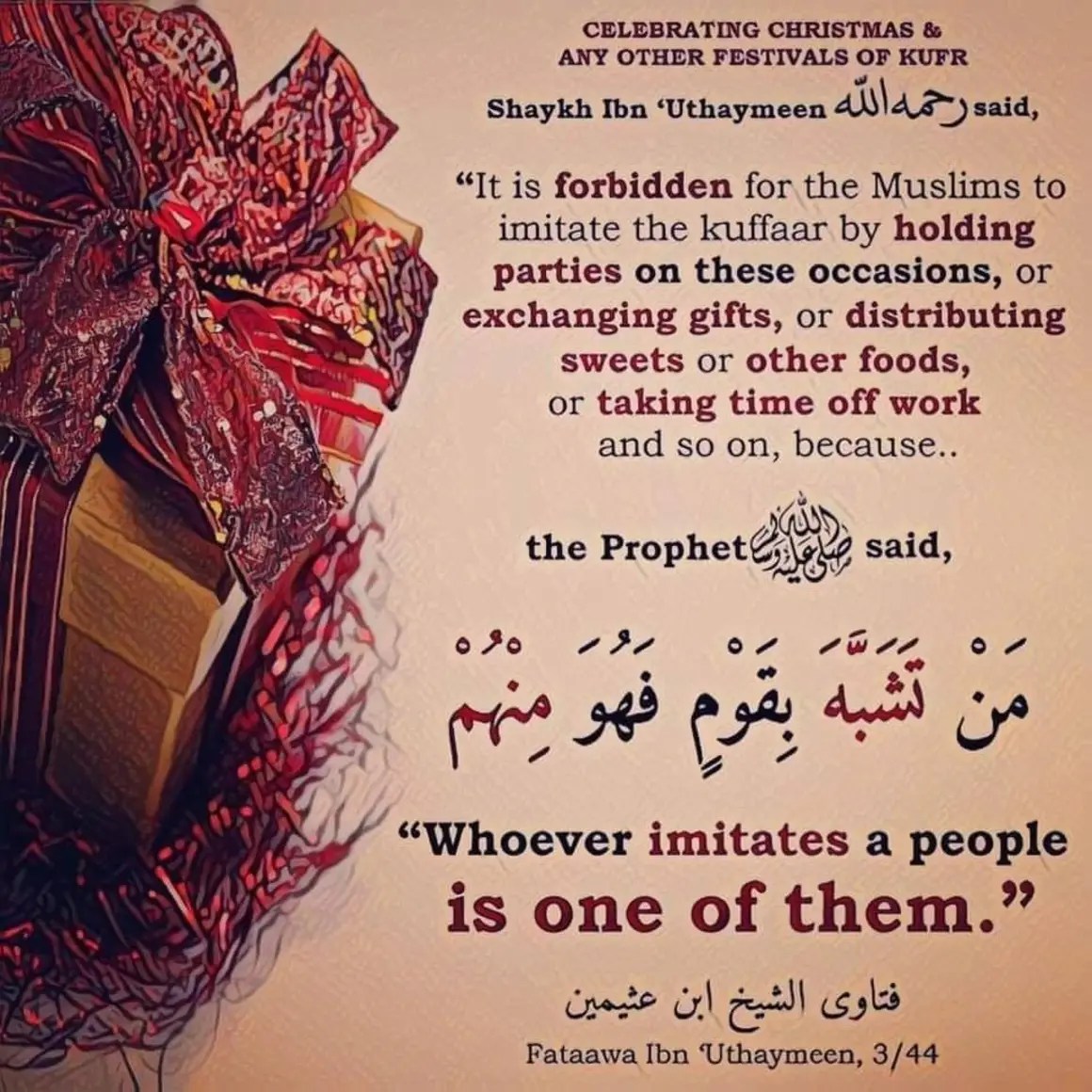
“Whoever gives a gift to the Muslims during these festivals unlike what he usually does at other times, his gift should not be accepted, especially if the gift is something that helps in imitating them, such as giving candles etc. at Christmas, or giving eggs, milk and lambs on Maundy Thursday which comes at the end of their fast (i.e., the end of Lent). Similarly, no gift should be given to a Muslim at the time of these festivals because of it being a festival (of the disbelievers), especially if it is something that aids in resembling them, as we have mentioned.”
– Iqtiḍāʾ as-Ṣirāṭ al-Mustaqīm (1/227)Ibn Nuḥās -may Allāh have mercy on him- said:
“And know that from the ugliest of innovations and the most evil is the agreement of the Muslims with the Christians in their annual celebrations in imitating them in their foods, actions, giving them gifts, and receiving gifts from them of food during their festivities. And this innovation is something experienced and undertaken by the people of Egypt. In this there is a weakness in one’s religious adherence, increasing the numbers of the Naṣārā and imitation of them which is not hidden. Exchanging of gifts during the festivals may be a reason for harmony between them and those whom they give gifts from the Muslims and nurturing of love and affection.”
﴿لَّا تَجِدُ قَوۡمًا یُؤۡمِنُونَ بِٱللَّهِ وَٱلۡیَوۡمِ ٱلۡـَٔاخِرِ یُوَاۤدُّونَ مَنۡ حَاۤدَّ ٱللَّهَ وَرَسُولَهُۥ وَلَوۡ كَانُوۤا۟ ءَابَاۤءَهُمۡ أَوۡ أَبۡنَاۤءَهُمۡ أَوۡ إِخۡوَ ٰنَهُمۡ أَوۡ عَشِیرَتَهُمۡۚ﴾
❝You will not find a people who believe in Allāh and the Last Day having affection for those who oppose Allāh and His Messenger, even if they were their fathers or their sons or their brothers or their kindred.❞
Al-Mujādilah, Ayah 22
So it is the duty of every capable person to denounce the Ahl adh-Dhimmah for demonstrating their festivals and seasons, and to prevent any Muslim who wants to imitate them in any of their actions, food, clothing, or mixing with them in that. And he whom Allāh sends astray has no guide, and He is over all things competent.
– Ibn al-Nuḥās, Tanbīh al-Ġāfilīn ʿan Aʿmāl al-Jāhilīn 1/307-310قال شيخ الإسلام ابن تيمية رحمه الله : ” وأما قبول الهدية منهم يوم عيدهم فقد قدمنا عن علي بن أبي طالب رضي الله عنه أنه أتي بهدية النيروز فقبلها .
وروى ابن أبي شيبة .. أن امرأة سألت عائشة قالت إن لنا أظآرا [جمع ظئر ، وهي المرضع] من المجوس ، وإنه يكون لهم العيد فيهدون لنا فقالت : أما ما ذبح لذلك اليوم فلا تأكلوا ، ولكن كلوا من أشجارهم .
و.. عن أبي برزة أنه كان له سكان مجوس فكانوا يهدون له في النيروز والمهرجان ، فكان يقول لأهله : ما كان من فاكهة فكلوه ، وما كان من غير ذلك فردوه .
فهذا كله يدل على أنه لا تأثير للعيد في المنع من قبول هديتهم ، بل حكمها في العيد وغيره سواء ؛ لأنه ليس في ذلك إعانة لهم على شعائر كفرهم … “.
ثم نبه رحمه الله على أن ذبيحة الكتابي وإن كانت حلالا إلا أن ما ذبحه لأجل عيده : لا يجوز أكله . قال رحمه الله : ” وإنما يجوز أن يؤكل من طعام أهل الكتاب في عيدهم ، بابتياعٍ أو هديةٍ أو غير ذلك مما لم يذبحوه للعيد . فأما ذبائح المجوس فالحكم فيها معلوم فإنها حرام عند العامة ، وأما ما ذبحه أهل الكتاب لأعيادهم وما يتقربون بذبحه إلى غير الله نظير ما يذبح المسلمون هداياهم وضحاياهم متقربين بها إلى الله تعالى ، وذلك مثل ما يذبحون للمسيح والزهرة ، فعن أحمد فيها روايتان أشهرهما في نصوصه أنه لا يباح أكله وإن لم يسم عليه غير الله تعالى ، ونقل النهي عن ذلك عن عائشة وعبد الله بن عمر …” انتهى من “ابن تيمية، اقتضاء الصراط المستقيم لمخالفة أصحاب الجحيم ٢/٥١”.
https://shamela.ws/book/11620/589
الشيخ: هذا غريب من الشيخ رحمه الله لأن قبول هديتهم في أعيادهم فيه يعني تشعر بأنه رضا رضا في أعيادهم لكن فيها آثار عن الصحابة رضي الله عنهم ولعل الصحابة إنما يقبلونها في ذلك الوقت لقوة الإسلام وأن الناس لن ينخدعوا بذلك وأن الكفار أيضا يعلمون أن المسلمين أعلى منهم لكن في وقتنا الحاضر لو قبلت الهدية منهم في وقت أعيادهم لطاروا فرحا وقالوا إن المسلمين وافقونا على أن هذا اليوم يوم عيد
فلهذا ينبغي أن نفصل في هذه المسألة ويقال إذا خيف أن يترافع الكفار وأن يستعلوا وأن يظنوا أن هذا رضا منا بأعيادهم فإنه لا يقبل الهدية، سواء كان مما يشترط فيه الذكاة أو لا
ابن عثيمين، شرح اقتضاء الصراط المستقيم ١/٤٠٩
https://archive.org/details/a1639n/page/n410
أن شيخ الإسلام -رحمه الله- قد نهى عن التهادي في أيام أعيادهم وذلك في كتابه الاقتضاء (٢/ ١٢) فقال -رحمه الله- “ومن أهدى (للمسلمين) (٤) هدية في هذه الأعياد, مخالفة للعادة في سائر الأوقات غير هذا العيد, لم تقبل هديته, خصوصاً إن كانت الهدية مما يستعان بها على التشبه بهم, في مثل إهداء الشمع ونحوه في الميلاد, أو إهداء البيض واللبن والغنم في الخميس الصغير الذي في آخر صومهم. وكذلك أيضا لا يهدى لأحد من المسلمين في هذه الأعياد هدية لأجل العيد, لا سيما إذا كان مما يستعان بها على التشبه بهم كما ذكرناه” .
أرشيف ملتقى أهل الحديث – 3 – المجلد 52 – الصفحة 238 – جامع الكتب الإسلامية
واعلم أن أقبح البدع وأشنعها موافقة المسلمين للنصارى في أعيادهم بالتشبه بهم في مأكلهم وأفعالهم والهدية إليهم وقبول ما يهدونه من مأكلهم في أعيادهم, وقد عانى هذه البدعة أهل بلاد مصر, وفي ذلك من الوهن في الدين, وتكثير سواد النصارى والتشبه بهم ما لا يخفى. وقد تكون المهاداة في الأعياد سبب للتآلف بينهم وبين ما يهدون إليه من المسلمين وتربية المودة والمحبة. وقد قال تعالى ? لا تَجِدُ قَوْماً يُؤْمِنُونَ بِاللَّهِ وَالْيَوْمِ الْآخِرِ يُوَادُّونَ مَنْ حَادَّ اللَّهَ وَرَسُولَهُ وَلَوْ كَانُوا آبَاءَهُمْ أَوْ أَبْنَاءَهُمْ أَوْ إِخْوَانَهُمْ أَوْ عَشِيرَتَهُمْ? [المجادلة الآية: 22] , فالواجب على كل قادر أن ينكر على أهل الذمة التظاهر بأعيادهم ومواسمهم, ويمنع من أراد من المسلمين التشبه بهم في شيء من أفعالهم ومأكلهم وملابسهم ومخالطتهم فيها, ومن يضلل الله فلا هادي له, وهو على كل شيءٍ قدير

