﷽
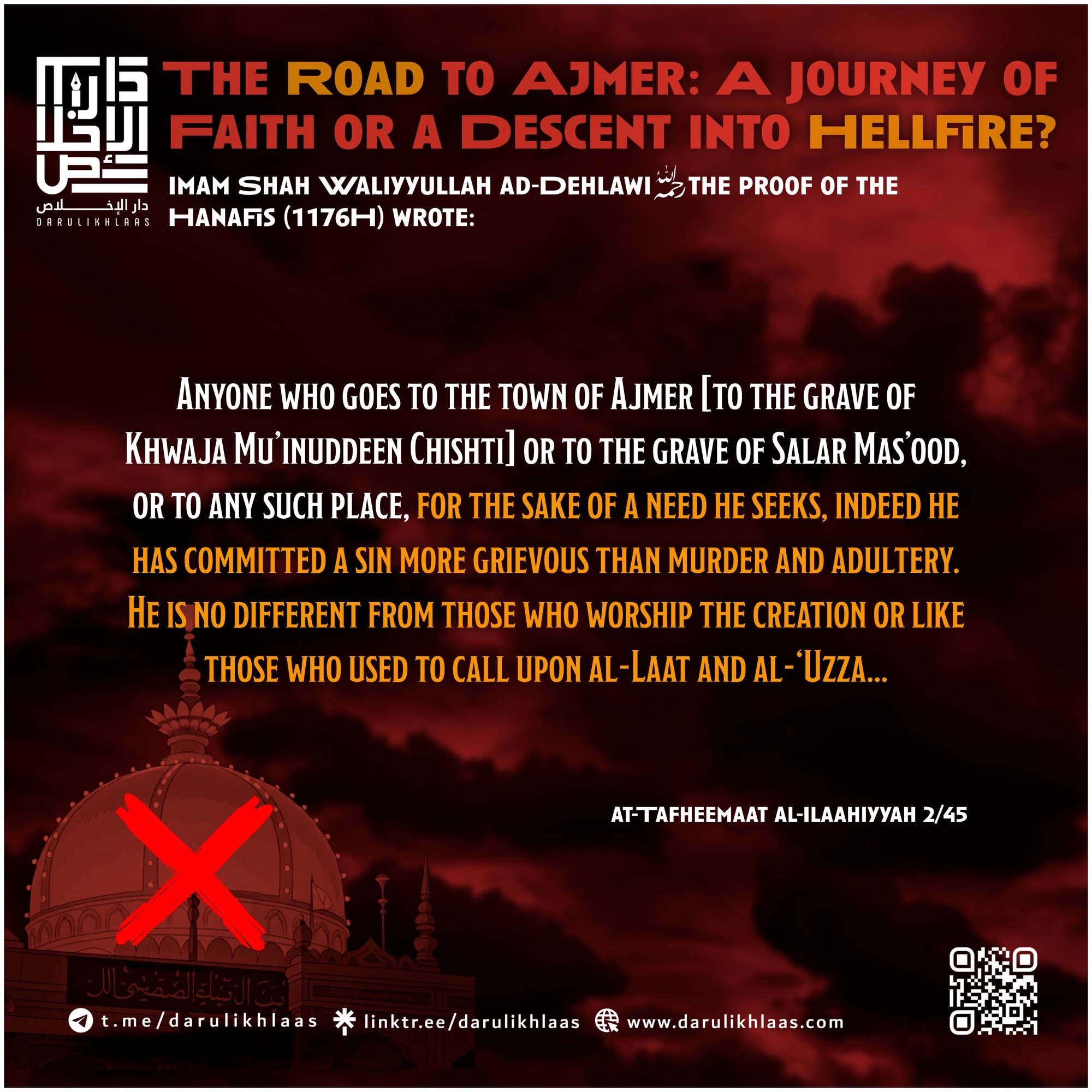
The Imām Waliyyullāh ad-Dehlawī -may Allāh have mercy on him-, titled by the Ḥanafīs as “Allāh’s proof to the universe”1 (1176H) said, affirming that the grave-worshippers by their calling out to the dead for help in hardship (Istighāthah) were similar to the early idol worshippers, those who worshipped al-ʿUzza and Al-Lāt:
❝Anyone who goes to the town of Ajmer2 or to the grave of Salār Masʿūd3, or to any such place, for the sake of a need he seeks, indeed he has committed a sin more grievous than murder and adultery. He is no different from those who worship the creation or like those who used to call upon al-Lāt and al-ʿUzza…❞
at-Tafhīmāt al-Ilāhiyyah 2/45 and Tatimmah al-Balāgh al-Mubīn 124 by Shāh Waliyyullāh
I said: This text, by this Imām, eradicates the practice of those who seek help from the dead, for this eminent Imām has ruled that their supplications are idolatrous, like the worship of al-Lāt and other idols.
– Shaykh Shamsuddīn Al-Afghānī رحمه الله in the book “The Efforts of Hanafi Scholars in Refuting the Beliefs of Grave Worshippers”, P1141-1142
– Translated by Abū Āsiyah Muzaffar -may Allāh forgive him, his parents, his mashayikh, his family and all the Muslims-
Source: https://shamela.ws/book/8594/1049#p1
Author’s Footnotes
- Refer: At-Taʿlīq aṣ-Ṣabīḥ, Al-Kāndahlavī. This is how ghulūw (extremism) is ↩︎
- Ajmer: A large, prosperous, ancient city in India, in which is the tomb of Khwaja Muʿinuddīn al-Ḥasan bin al-Ḥasan as-Sijzī al-Chishtī, the Imām of the Sūfī Qubūriyyah (grave-worshipping) Chishtiyyah (627 AH). He was originally from Sijistān, and he made a pilgrimage to the tomb of al-Hujwirī (465 AH) in Lahore, and secluded himself at his tomb, then he secluded himself at the tomb of an-Zanjānī (…), then he died in Ajmer. He has a great shrine on his tomb, a towering structure, and his tomb is an idol worshipped by the people of India, and they make pilgrimages to it, even the senior Deobandis would sit at his tomb for contemplation, as mentioned previously. ↩︎
- He is Ibn Sāhū bin ʿAtāʾ Allah, a warrior who was killed during the reign of Sultan Mahmud ibn Sabuktikīn (557 AH). His grave is in the city of Bahraich in India, and it has become an idol worshipped by the people of India, who make pilgrimages to it. They gather every year to celebrate it, claiming that they marry him off every year, since he died a bachelor. The crowds during this season become so large that people cannot find a way to enter his grave. Refer: Nuzhat al-Khawatir 1/86-88, and see: Risalat at-Tawhid al-Nadwi 26-27 ↩︎
وقال الإمام ولي الله الدهلوي الملقب عند الحنفية ” بحجة الله على العالمين ” (١١٧٦هـ) محققا أن القبورية باستغاثتهم بالأموات* مثل الوثنية الأولى عبدة العزى واللات*
٤ – مقالة الإمام ولي الله الدهلوي حجة الحنفية (١١٧٦هـ) : ((كل من ذهب إلى بلدة أجمير، أو إلى قبر سالار مسعود، أو ما ضاهاها لأجل حاجة يطلبها؛ فإنه آثم إثمًا أكبر من القتل والزنى، ليس مثله إلا مثل من كان يعبد المصنوعات، أو مثل من كان يدعو اللات والعزى … )) [ص ١١٤١-١١٤٢] .
قلت: هذا النص، لهذا الإمام، يقطع دابر القبورية المستغيثين بالأموات* فقد حكم عليهم هذا الإمام الهمام، بأنهم في استغاثاتهم وثنية كعباد اللات والمصنوعات*
——–
ص7 – كتاب جهود علماء الحنفية في إبطال عقائد القبورية – المقالة الحنفية الحنيفية التي تقمع القبورية
راجع: التعليق الصبيح للكاندهلوي ٢/١٣ هكذا يكون الغلو.
أجمير: مدينه كبيره عامره قديمه في الهند، وبها قبر الخواجة معين الدين الحسن بن الحسن السجزي الجشتي، إمام الصوفية القبورية الجشتية (٦٢٧هـ)، كان أصله من سجستان، وحج إلى قبر الهجويري (٤٦٥هـ) بلاهور، واعتكف على قبره، ثم اعتكف على قبر الزنجاني (…)، ثم مات في أجمير، وله مشهد عظيم على قبره عمارة شامخة، وقبره وثن يعبده أهل الهند، ويحجون إليه، حتى كان بعد كبار الديوبندية يجلس عند قبره للمراقبة، كما سبق.
هو: ابن ساهو بن عطاء الله، كان غازيا، قتل في عهد السلطان محمود بن سبكتكين (٥٥٧هـ)، وقبره في مدينه بهرائج بالهند،وجعل قبره وثنا يعبده أهل الهند، ويحجون إليه، يجتمعون كل سنة للاحتفال به على زعم أنهم يزوجونه كل سنة، حيث مات عزبا، ويصل الزحام في هذا الموسم إلى حد لا يجد الناس سبيلا إلى دخول قبره، انظر: نزهه الخواطر ١/٨٦-٨٨، وانظر: رسالة التوحيد الندوي ٢٦-٢٧
التفهيمات الإلهية ٢/٤٥، وتتمة البلاغ المبين ١٢٤ للشاه ولي الله

